
An evening Bali traditional dance experience offers a completely different way to spend the hours after sightseeing. Instead of ending your day at a shopping mall, café, or beach club, you can watch stories from Balinese mythology unfold through chanting, movement, costume, ritual-inspired performance, and fire.
The atmosphere also changes after sunset. Stage lights become warmer, costumes stand out against the darkness, rhythmic voices fill the performance space, and moments that might feel theatrical during the day can become far more dramatic at night.
For travelers who want to understand Bali beyond beaches and viewpoints, an evening cultural performance can be an easy introduction. You do not need to know every character or story beforehand. Knowing a few basic ideas before the show, however, can make the experience much more meaningful.
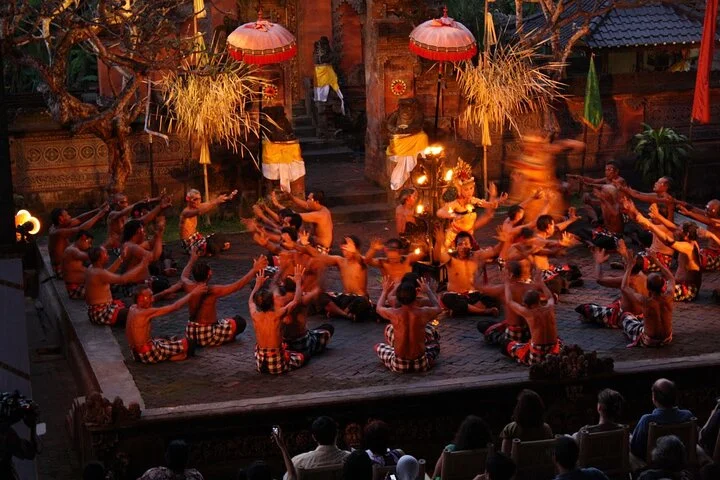
Image source: Kura-Kura Blog – Evening Traditional Dance of Bali.
Why Watch Traditional Balinese Dance in the Evening?
Traditional dance can be seen in different places and at different times around Bali, but an evening performance has its own atmosphere.
The transition from daylight into darkness naturally changes how you experience the performance. Fire becomes brighter, shadows become more dramatic, chanting feels more noticeable, and attention moves away from the surrounding scenery toward the performers themselves.
It can also fit conveniently into a Bali itinerary. You can spend the morning and afternoon visiting beaches, temples, markets, or other attractions, then use the evening for a cultural experience instead of adding another full sightseeing destination.
Why an Evening Cultural Show Works Well
- It gives you something culturally different to do after daytime sightseeing.
- Lighting and fire elements become more dramatic after sunset.
- The performance introduces Balinese mythology through movement and storytelling.
- It works well for travelers who do not want another long daytime excursion.
- Couples, families, and first-time visitors can experience Bali’s performing arts together.
1. Start with Sanghyang and Bali’s Ritual-Inspired Performance
One of the most interesting parts of the Batubulan evening program comes before the better-known Kecak sequence.
The Sanghyang Dance comes from a ritual tradition associated with trance, spiritual protection, and ceremonial purification. Its atmosphere is therefore quite different from watching a modern stage production.
You do not need to understand every ritual detail to appreciate the mood. Listen to the chanting, notice how repetition shapes the rhythm, and watch how the performance gradually builds an atmosphere before the later Kecak and fire sequences.
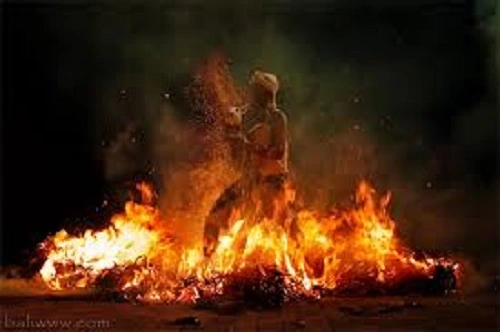
Image source: Kura-Kura Blog – Evening Traditional Dance of Bali.
2. Listen Carefully When the Kecak Rhythm Begins
Kecak is one of the most recognizable Balinese performances, but what makes it unusual becomes clearer when you hear it in person.
Instead of relying on a conventional musical ensemble, a large group of male performers creates the rhythm using synchronized voices. Repeated patterns of cak, cak, cak overlap, accelerate, soften, and rise again as the story develops.
The performers sit together while characters from the story enter the center of the performance area. This contrast between the seated chorus and expressive central characters gives Kecak its distinctive visual and musical structure.
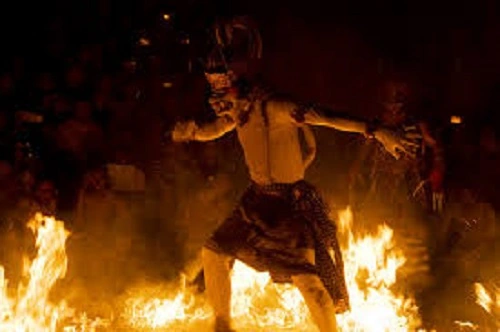
Image source: Kura-Kura Blog – Evening Traditional Dance of Bali.
3. Know the Ramayana Story Before the Performance
You can enjoy the costumes, movement, chanting, and atmosphere without knowing the story, but even a simple introduction to the Ramayana makes the performance easier to follow.
The Kecak sequence commonly centers on Prince Rama and his wife Sita. After Sita is taken by Ravana, Rama receives help from Hanuman and the monkey army in the effort to rescue her.
Rama
The central hero whose journey leads to the battle to rescue Sita.
Sita
Rama’s wife, whose abduction becomes the central conflict of the story.
Ravana
The powerful antagonist who takes Sita and brings the story toward conflict.
Hanuman
The white monkey hero who helps Rama and often becomes one of the most dynamic characters on stage.
Rather than trying to memorize every scene, remember these four characters. Doing so makes it much easier to recognize the basic direction of the story while still enjoying the performance visually.
4. Stay for the Fire Dance Finale
The atmosphere changes again toward the end of the Batubulan performance when fire becomes a major visual element.
Glowing embers, smoke, movement, chanting, and darkness combine to create one of the night’s strongest visual moments. The contrast between the bright fire and the surrounding evening setting makes the finale feel noticeably different from the earlier parts of the program.
This is also why an evening Bali traditional dance performance works particularly well after sunset. Fire that would be less striking during bright daylight becomes a central part of the atmosphere.

Image source: Kura-Kura Blog – Evening Traditional Dance of Bali.
5. Batubulan or Uluwatu: Two Different Ways to Spend a Cultural Evening
Travelers searching for traditional Balinese dance often come across both Batubulan and Uluwatu. Both can create memorable evenings, but the experiences are not identical.
Batubulan Evening Performance
This option focuses strongly on the cultural performance itself. The current Kura-Kura Bus program features three elements: Sanghyang Dance, Kecak Dance, and a Fire Dance finale.
It works well when your main interest is seeing several performance traditions within one evening program.
View An Evening of Bali Traditional DanceUluwatu Sunset Kecak
Uluwatu places more emphasis on the combination of location and performance. The Kecak show takes place in the clifftop temple area around sunset, creating an open-air setting overlooking the Indian Ocean.
The Kura-Kura Bus evening package then continues to Jimbaran Bay for a beachfront seafood dinner.
Explore Uluwatu Sunset Kecak Dance6. Choose the Evening Based on What You Want to Experience
Instead of asking which traditional dance experience is universally better, think about what you want the evening to emphasize.
Choose Batubulan for Performance Variety
The Batubulan program is a strong choice when you want to see Sanghyang, Kecak, and fire-based performance within the same cultural evening.
Choose Uluwatu for Sunset and Scenery
The Uluwatu option suits travelers who want the performance to be part of a larger sunset experience involving a dramatic cliffside temple and ocean views.
Choose a Classical Dance Setting for Detailed Movement
Other venues around Bali, including parts of Ubud, are known for classical dance programs where intricate gestures, eye movements, costume, and gamelan accompaniment may become a stronger part of the experience.
The best choice therefore depends less on finding one universally superior performance and more on deciding whether your priority is ritual-inspired variety, sunset scenery, theatrical energy, or classical dance technique.
7. Turn the Performance into a Complete Bali Evening
You do not need to fill every minute before and after the show. A traditional dance performance often works best as the main event of the evening rather than one stop in an overly busy itinerary.
Before the Show
Finish daytime sightseeing early enough to return to your hotel, refresh, and prepare without rushing directly from another attraction.
During the Performance
Spend more time watching the performers than looking through your phone. Notice the rhythm, expressions, costumes, and changes in atmosphere.
After the Show
Continue with dinner if it fits your itinerary, or simply return to the hotel and keep the rest of the evening relaxed.
What to Expect from the Batubulan Evening Dance Experience
If you prefer not to arrange transportation and the performance separately, Kura-Kura Bus offers An Evening of Bali Traditional Dance as an organized cultural experience.
Hotel Pick-Up
The journey begins with pick-up from selected hotel areas. This removes the need to arrange separate evening transport to and from Batubulan.
Travel to Batubulan Village
Batubulan is associated with Balinese performing arts and provides the cultural setting for the evening program.
Traditional Dance Performance
The current program features Sanghyang Dance, Kecak Dance, and a Fire Dance sequence, with the performance itself taking approximately one hour.
Optional Dinner
After the performance, guests who would like to have dinner can ask the guide to drop them at a local restaurant close to their hotel. Meals are not included in the standard program.
Return Transfer
After the evening program, the tour continues with a transfer back toward the hotel.
Watch the Dance as Storytelling, Not Only Entertainment
One of the easiest ways to appreciate Balinese dance is to stop expecting it to work like a modern theatre production.
Movement, chanting, costume, expressions, ritual elements, and characters can communicate different parts of the story. Some sequences are dramatic and obvious, while others use gestures and symbolism that may be unfamiliar to first-time visitors.
You do not need to understand every detail. Instead, watch for changes in rhythm, the entrance of important characters, the relationship between performers and chorus, and the transition from quieter scenes toward more intense moments.
Four Things Worth Watching Closely
- Hands: detailed gestures form an important part of Balinese dance vocabulary.
- Eyes: facial expression and controlled eye movement can be surprisingly expressive.
- Rhythm: notice how movement responds to chanting or musical patterns.
- Costume: character, status, mood, and visual drama are reinforced through elaborate clothing and accessories.
Who Will Enjoy an Evening Bali Traditional Dance?
First-Time Bali Visitors
An evening performance offers a straightforward introduction to Bali’s mythology, traditional arts, costumes, and performance culture without requiring an entire day.
Couples
A cultural show provides a quieter alternative to nightlife and can be combined comfortably with dinner afterward.
Families
The changing costumes, chanting, characters, movement, and fire elements can make the performance visually engaging for different generations.
Culture-Focused Travelers
If temples and traditional villages are already important parts of your Bali itinerary, an evening performance adds another dimension by showing stories through live movement and sound.
Repeat Visitors
Travelers who have already explored Bali’s major sightseeing attractions can use an evening dance performance to experience the island from a more cultural perspective.
Photographers
Costume, fire, movement, expressions, and evening light offer interesting photographic subjects, although guests should always respect the venue’s photography rules.
How to Photograph a Traditional Dance Without Missing the Experience
Balinese performances are visually impressive, so it is natural to want photographs. The challenge is avoiding the situation where you watch almost the entire show through a screen.
Take a Few Wider Photographs
Capture the overall stage, chorus, and atmosphere rather than photographing only individual performers.
Wait for Strong Visual Moments
Costume details, character entrances, group formations, and the fire sequence often provide more interesting photographs than continuously taking pictures throughout the show.
Avoid Distracting Flash
Follow local venue rules and avoid using flash when it could disturb performers or other audience members.
Put the Camera Down Sometimes
The sound of Kecak chanting and the intensity of the fire sequence are difficult to reproduce in a photograph. Some parts of the performance are better experienced directly.
Practical Tips for an Evening Traditional Dance in Bali
Confirm the Current Performance Schedule
Schedules and performance arrangements can change, so confirm the latest operating information before your visit.
Be Ready for Your Hotel Pick-Up
If you join an organized tour, arrive at the hotel meeting point before the scheduled pick-up time so the evening does not begin in a rush.
Wear Comfortable Clothing
Choose clothing suitable for travelling, sitting through the performance, and continuing to dinner afterward if you wish.
Check the Photography Rules
Photography and video policies can depend on the venue and performance conditions. Follow instructions provided on site.
Learn the Basic Story First
You do not need a detailed history lesson, but knowing Rama, Sita, Ravana, and Hanuman makes the Kecak storyline much easier to recognize.
Keep Dinner Plans Flexible
If dinner is not included in your selected tour, consider where you would like to eat afterward and discuss the arrangement with your guide when appropriate.
Do Not Judge Every Dance by Kecak
Kecak is distinctive because of its vocal chorus, but Balinese performing arts include many other styles with different music, costumes, movement, and ceremonial roles.
Read More About Evening Traditional Dance in Bali
If you want to understand the performances before deciding which evening experience to choose, these Kura-Kura Blog guides provide more background.
Kecak Dance at Uluwatu Temple
If the cliffside sunset experience interests you, explore the Kecak Dance at Uluwatu Temple history and visitor guide .
Where to Watch Traditional Balinese Dance
To compare more performance locations around the island, see Top Spots to Experience Traditional Balinese Dance in Bali .
Spend an Evening with Bali Stories, Rhythm and Fire
An evening Bali traditional dance experience gives you the chance to see another side of the island after the daytime sightseeing ends.
In Batubulan, Sanghyang, Kecak, and Fire Dance create an evening shaped by ritual-inspired movement, rhythmic chanting, mythology, costume, and dramatic visual moments.
If you prefer sunset scenery, Uluwatu offers a different atmosphere by combining Kecak with one of Bali’s most famous clifftop locations. Choose the setting that suits your itinerary and let traditional performance become part of your Bali evening.
View Evening Traditional Dance Tour Explore Shuttle Bus