
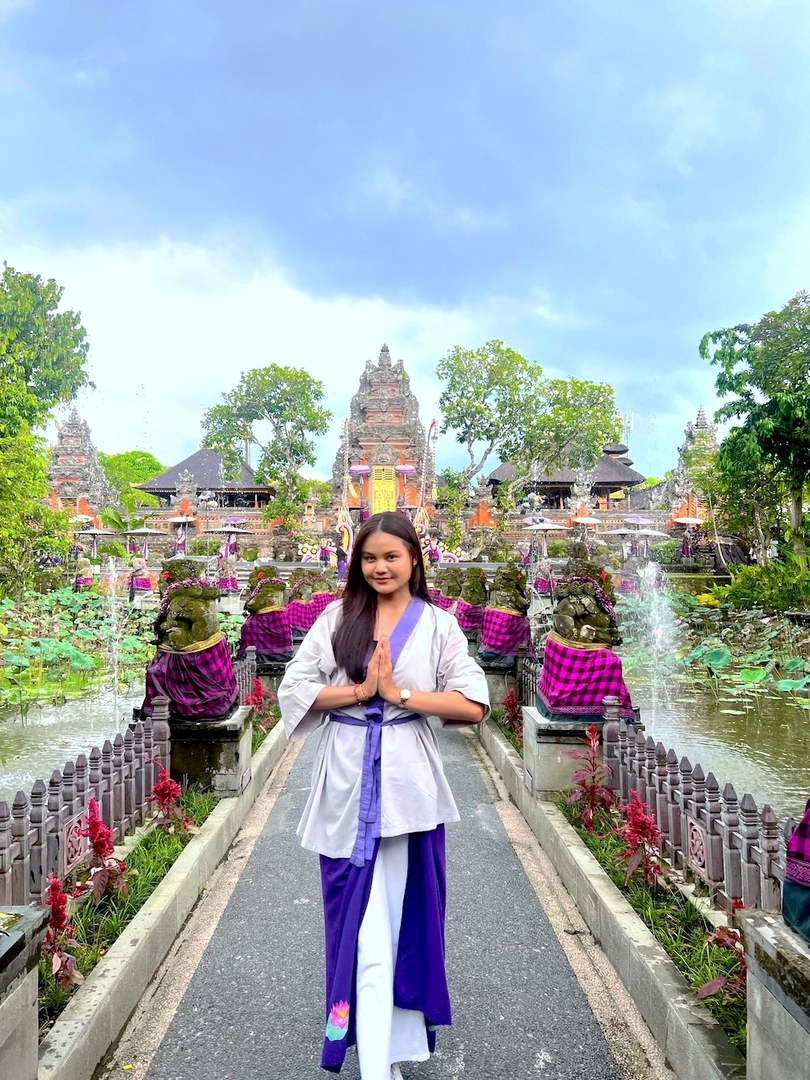
Visiting a Balinese temple is not the same as entering a museum or historical monument. A pura remains an active place of worship, with prayers, ceremonies, offerings and community life continuing around visitors.
The most useful rule is simple: observe first, follow local instructions, and do not assume every part of the temple is open to tourism. This updated guide focuses on practical etiquette rather than trying to turn every local custom into a rigid universal rule.
Dress modestly, wear the sarong or sash required by the temple, keep your voice low, give worshippers space, do not step on offerings, and never climb or sit on sacred structures.
Under Bali’s current foreign-tourist rules, visitors may not enter the Utamaning Mandala and Madyaning Mandala of sacred places unless entering for worship under the applicable conditions. Menstruating women are also prohibited from entering those inner and middle sanctums.
Want a temple visit with cultural context instead of just a photo stop?
Current Kura-Kura Bus temple experiences include Tirta Empul purification, Besakih, Uluwatu and Taman Ayun–Tanah Lot routes with licensed guides.
Why Temple Etiquette Matters
Balinese temples are active sacred spaces rather than attractions created for visitors. The same courtyard that looks photogenic to a traveler may be used for offerings, prayer, ceremonial preparation or a community procession.
Do not walk through prayer lines or position yourself between worshippers and a shrine.
Temporary restrictions may apply during ceremonies even when an area is normally open.
Do not touch shrines, ceremonial objects or offerings unless specifically invited.
Ask before taking close-up photographs of worshippers, priests or ceremony participants.
What to Say — and How to Speak
The source article introduced Tri Kaya Parisudha: the principle of thinking, speaking and acting well. For visitors, the practical version is straightforward — speak calmly, avoid dismissive jokes about rituals, and ask questions with genuine respect.
A simple “Om Swastiastu” may be used as a respectful Balinese greeting, but you do not need to perform special phrases to be a considerate visitor. Your behavior matters more than memorizing ceremonial language.
What to Wear at a Bali Temple
Wear clothing that is modest and appropriate for a sacred place. Many temples require or provide a sarong or kamen and sash for visitors.
The old article stated that women are expected to wear a kebaya. That is too broad for ordinary tourism: a kebaya is important in Balinese traditional and ceremonial dress, but it is not a universal requirement for every tourist entering every temple.
Covered torso, modest shorts/trousers or skirt, and the required temple cloth or sash.
Sarongs, sashes or prayer garments may be supplied or required depending on the site and activity.

What to Avoid Inside a Balinese Temple
Canang sari and other offerings may be placed on the ground around temple and public areas.
Never sit, stand or climb on shrines, walls or sacred monuments for photographs.
When seated, position yourself respectfully rather than extending your feet toward sacred objects.
Avoid shouting, aggressive behavior or disruptive joking in a sacred area.
Not Every Temple Area Is Open to Tourists
Bali’s 2025 foreign-tourist rules specifically restrict entry to the Utamaning Mandala and Madyaning Mandala — the inner and middle sanctums of sacred places — except for worship under the required conditions.
This is important because a temple complex can include public visitor areas, outer courtyards and more restricted sacred zones. Do not assume a gate is open simply because other tourists are nearby.

Menstruation & Temple Access
The original article described menstruation using the concept of cuntaka and then suggested women could still visit outer areas. The current regulation gives us a more precise way to explain it.
Under Bali’s current foreign-tourist rules, menstruating women are prohibited from entering the inner and middle sanctums of sacred places. That does not automatically mean every surrounding visitor area is closed.
Photography Rules: Respect Comes Before the Photo
Flash can distract worshippers and performers during ceremonies.
Get permission before photographing individual worshippers or ceremony participants at close range.
Move out of ceremonial routes even if the location offers a better composition.
Never cross ropes, walls or restricted areas to improve a photo angle.

Current Kura-Kura Bus Temple Experiences
These current tours are useful if you want a licensed guide to explain temple context, access rules and local customs rather than navigating everything independently.
Balinese Purifying Tour at Tirta Empul Temple
Mother Temple of Besakih & Karangasem Tour
Uluwatu Sunset Kecak Dance & Jimbaran Seafood Dinner
Taman Ayun Temple, Sangeh Monkey Forest & Tanah Lot Temple
Frequently Asked Questions About Bali Temple Etiquette
What should I wear to a Bali temple?
Wear modest clothing and follow the temple’s own dress instructions. Many temples require or provide a sarong or kamen and sash. A kebaya is not a universal requirement for ordinary visitors.
Can tourists enter every part of a Balinese temple?
No. Bali’s current rules prohibit foreign tourists from entering the Utamaning Mandala and Madyaning Mandala of sacred places unless entering for worship in the appropriate attire and under the applicable conditions.
Can menstruating women enter Balinese temples?
Under Bali’s current foreign-tourist rules, menstruating women may not enter the inner and middle sanctums of sacred places. That does not automatically mean every outer visitor area is closed; follow the site’s signs and staff instructions.
What should I avoid doing inside a temple?
Do not climb sacred structures, interrupt prayers or ceremonies, step on offerings, point your feet toward shrines, behave loudly, or ignore barriers and local instructions.
Can I take photos in a Balinese temple?
Usually yes in public visitor areas, but never block worshippers or ceremonies. Avoid flash during rituals and ask permission before taking close-up photos of people.
Can visitors join the purification ritual at Tirta Empul?
Yes, visitors may join the purification ritual when permitted and when they follow local temple guidance. The current Kura-Kura Bus Purifying Tour includes guidance, temple entrance, offerings and a priest blessing.
Which Kura-Kura Bus tours are useful for temple etiquette and cultural context?
Current options include the Tirta Empul Balinese Purifying Tour, Mother Temple of Besakih & Karangasem Tour, Uluwatu Sunset Kecak Dance & Jimbaran Dinner, and Taman Ayun–Sangeh–Tanah Lot Tour.
Plan a Respectful Bali Temple Day
Tell us your travel date, hotel, group size and which temple you want to visit. We can help you compare current temple tours and pickup conditions.
