
Travel around Bali and you will soon notice that music appears almost everywhere, Gongs accompany ceremonies, drums guide traditional dances, and bright metallic melodies often fill village pavilions, These sounds introduce visitors to Bali traditional instrument and music, especially Balinese gamelan. Rather than one instrument, gamelan brings several instruments and musicians together to create layered rhythms.
However, Balinese music offers more than a beautiful soundtrack. It connects craftsmanship, ceremonies, dance, village traditions, and community life.
This guide introduces some of Bali’s traditional instruments, explains how gamelan works, and shows how you can experience the music yourself.
What Is Balinese Gamelan?
Gamelan refers to a traditional musical ensemble rather than one particular instrument.
Musicians play bronze-keyed instruments, gongs, drums, cymbals, and sometimes bamboo flutes. Each player contributes a different musical pattern. Together, those patterns create the distinctive sound associated with Bali.
Some instruments carry melodies, while others control rhythm or mark important moments within the music. This teamwork makes gamelan fascinating to watch as well as hear.
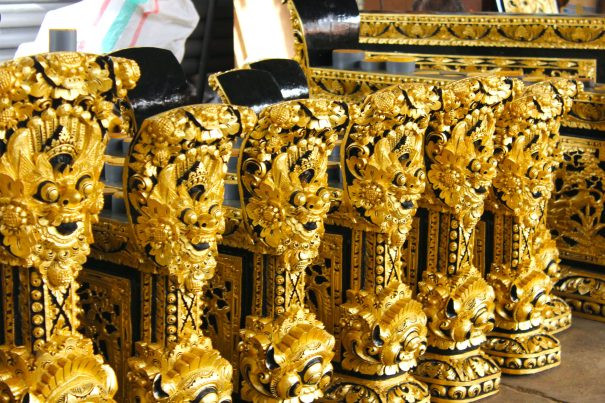 Image source: Kura-Kura Bus / Kura-Kura Blog.
Traditional Music and Instruments You May See in Bali
A Balinese gamelan ensemble contains several types of instruments. Although each ensemble can differ, visitors commonly encounter the following.
Gangsa
Gangsa instruments use bronze keys that musicians strike with mallets. Several players often combine different patterns to create quick and energetic melodies.
Gong
Large gongs produce deep, resonant sounds. Musicians use them to mark important points within a musical cycle.
Kendang
The kendang drum helps guide the ensemble. Drummers control rhythm, tempo, and transitions while coordinating closely with other musicians and dancers.
Ceng-Ceng
Ceng-ceng cymbals create sharp and energetic accents. They add extra power to lively sections of a performance.
Suling
The suling is a bamboo flute. Its gentle sound creates a softer contrast to the bronze instruments, drums, and gongs.
Why Does Balinese Gamelan Sound So Fast?
One musician does not necessarily play every note you hear.
Instead, two or more musicians can play alternating patterns. Their notes fit together and create a faster melody when the audience hears them as one.
This technique requires strong concentration and teamwork. Every musician needs to understand when their notes belong within the larger rhythm.
When you watch gamelan, try listening to one instrument before focusing on the entire ensemble. You may start noticing how individual rhythms connect.
Traditional Instruments Are Also Works of Art
Balinese musical instruments attract attention even before musicians begin playing them.
Craftspeople often place bronze instruments inside beautifully carved wooden frames with detailed decorations. The finished ensemble brings together metalwork, carving, painting, music, and traditional design.
Therefore, exploring Bali traditional instrument and music also introduces visitors to another side of Balinese craftsmanship.
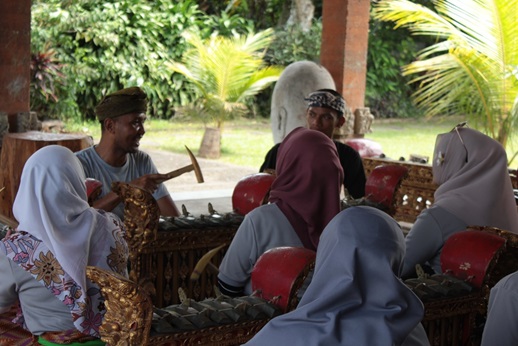 Image source: Kura-Kura Bus / Kura-Kura Blog.
Where Can You Hear Traditional instrument and Music in Bali?
Traditional music remains part of everyday cultural life across Bali.
You may hear gamelan during temple ceremonies, village celebrations, processions, dance performances, and cultural events.
Each setting creates a different atmosphere. Some performances feel energetic and dramatic, while ceremonial music may create a more spiritual mood.
When you encounter music during a ceremony, remember that the musicians play an important cultural role. Respect the event and follow local guidance when taking photos or approaching the performance area.
Discover How Balinese Traditional Instrument and Music Are Made
The story of gamelan starts before musicians perform.
Traditional craftspeople shape, finish, decorate, and tune each instrument. Their work requires skill and knowledge that families and communities have developed over generations.
In Blahbatuh Village, travelers can learn more about traditional gong-making and see another side of Balinese music culture.
Watching the craftsmanship makes it easier to appreciate the finished instruments. Every gong and bronze key represents many hours of work before it produces its first note.
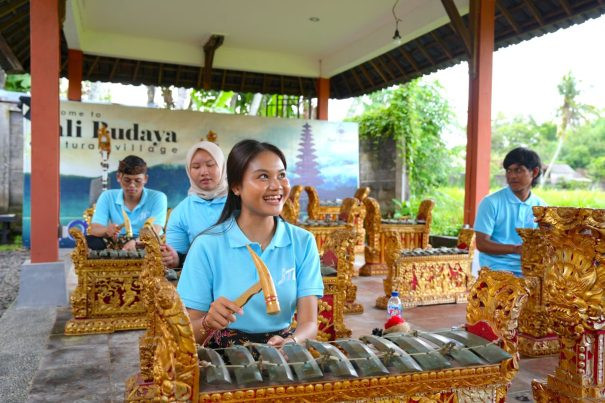 Image source: Kura-Kura Bus / Kura-Kura Blog.
Try Playing Balinese Gamelan Yourself
Watching professional musicians offers a great introduction, but playing a simple rhythm can help you understand gamelan even better.
Beginners can start by learning how to hold the mallet, strike the instrument, control each note, and follow a basic rhythm.
Once several people begin playing together, you can hear how separate patterns become one piece of music.
You do not need previous musical experience. The goal is not to master gamelan in one session. Instead, you can experience how cooperation and timing shape Balinese music.
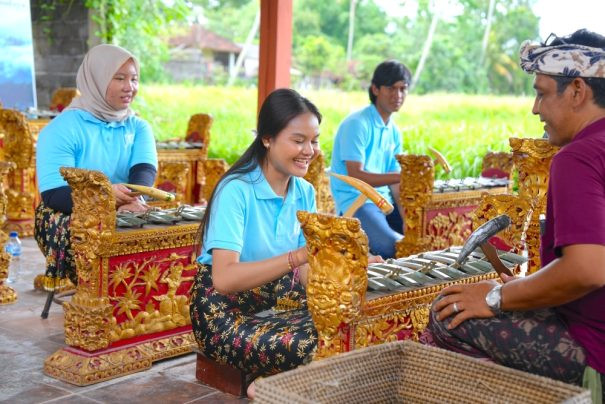
Image source: Kura-Kura Blog / Kura-Kura Bus.
Who Will Enjoy a Balinese Gamelan Experience?
- Culture lovers: discover an important part of Balinese village and ceremonial life.
- Music enthusiasts: explore different rhythms, instruments, and musical techniques.
- Families: enjoy an interactive cultural activity together.
- Repeat Bali visitors: experience something beyond beaches and famous sightseeing spots.
- Creative travelers: see how craftsmanship, art, and music connect.
How to Experience Balinese Music Respectfully
- Follow local instructions: listen to your guide or host.
- Ask before touching instruments: some instruments may have cultural or ceremonial importance.
- Respect ceremonies: avoid treating religious events like tourist performances.
- Take photos carefully: do not interrupt musicians or ceremonies for pictures.
- Listen first: understanding the rhythm makes a hands-on lesson much easier.
Frequently Asked Questions About Bali Traditional Instrument and Music
What is the most famous traditional music in Bali?
Balinese gamelan is one of the island’s best-known musical traditions. An ensemble usually combines bronze instruments, gongs, drums, cymbals, and sometimes bamboo flutes.
Where can I hear traditional Balinese music?
You may hear gamelan during ceremonies, cultural performances, traditional dances, village celebrations, and processions.
Can tourists learn Balinese gamelan?
Yes. Beginner-friendly cultural experiences allow visitors to learn simple rhythms with guidance from local musicians.
Do I need musical experience?
No. Beginners can start with simple patterns and gradually learn how their part connects with the rest of the ensemble.
Where can I try gamelan in Bali?
Kura-Kura Bus also offers the Discover Balinese Gamelan experience, which combines traditional instrument craftsmanship in Blahbatuh with a hands-on gamelan session in Batusepih.
Can I see how traditional Balinese instruments are made?
Yes. A visit to a traditional gong workshop offers a closer look at the craftsmanship behind gamelan instruments.
Discover Bali Traditional Instrument and Music
Bali offers more than beautiful landscapes and temples. Its music tells another part of the island’s story.
Gongs, drums, bronze instruments, cymbals, and bamboo flutes come together through rhythm, craftsmanship, and teamwork.
Watching a performance gives you a first impression. However, meeting craftspeople and trying a gamelan rhythm yourself can make the tradition much easier to understand.
For travelers who want to explore Bali beyond ordinary sightseeing, a traditional music experience offers a meaningful way to connect with local culture.
Discover Balinese Gamelan Also Contact Kura-Kura Bus