
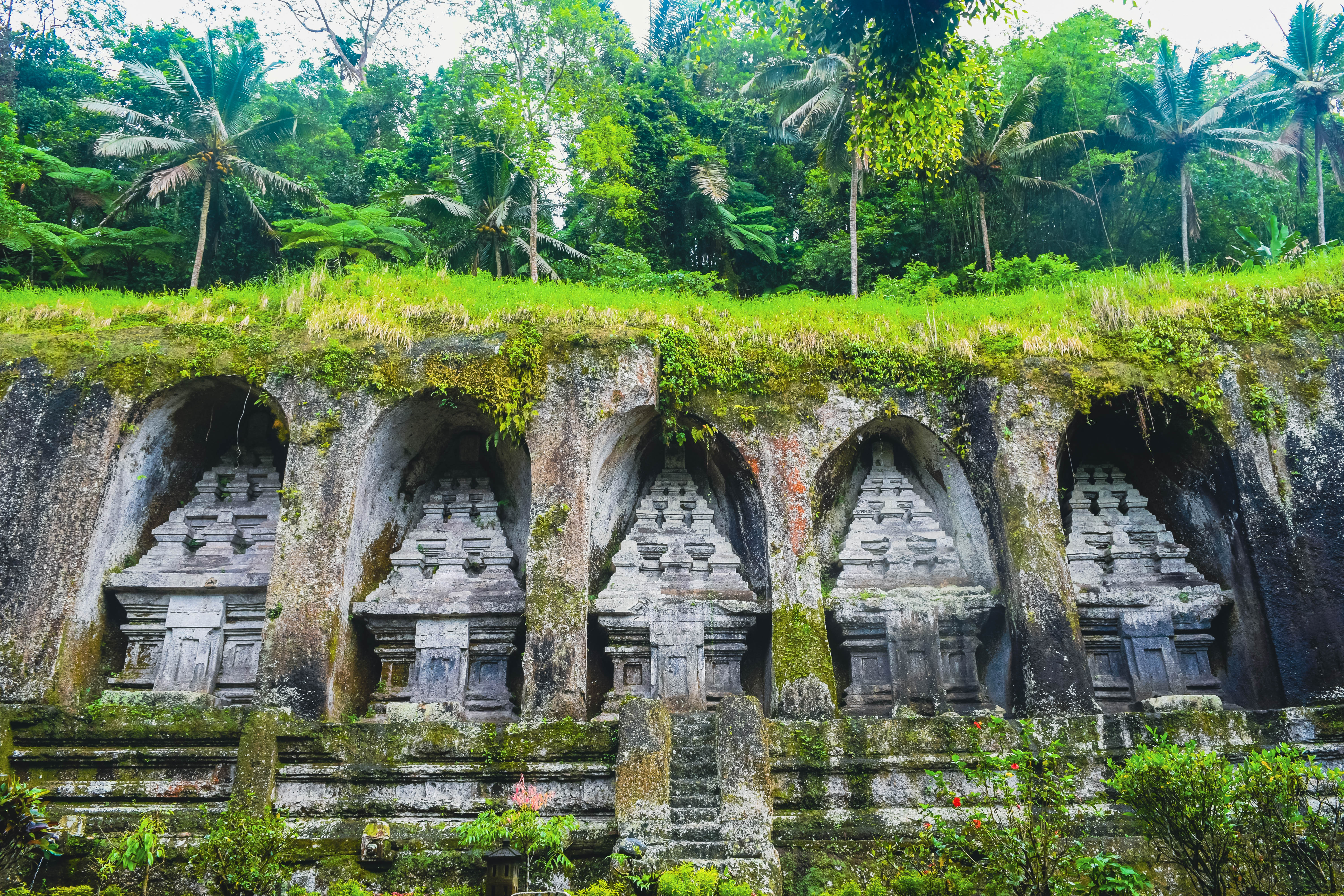
Hidden within a lush valley in central Bali, Gunung Kawi offers one of the island’s most fascinating historical sites. Located near Tampaksiring, this ancient temple complex features impressive shrines carved directly into the cliffs along the Pakerisan River.
Unlike many temples across Bali that feature traditional shrines and courtyards, this historic site stands out because of its monumental rock carvings. In fact, the shrines date back to the 11th century, making the complex one of the oldest archaeological landmarks on the island.
For travelers exploring cultural destinations near Ubud, this ancient site provides both historical insight and breathtaking scenery. Visitors not only discover Bali’s early history, but they also enjoy a peaceful valley surrounded by rice terraces and tropical forests.
History of Candi Gunung Kawi Bali
The temple complex dates back to the 11th century during the reign of King Anak Wungsu from the Warmadewa dynasty. During that period, Balinese craftsmen carved the monumental shrines directly into the cliff walls overlooking the sacred river.
Historians believe the carvings served as memorial monuments dedicated to members of the royal family. According to local tradition, the site honors King Udayana, Queen Mahendradatta, and their descendants.
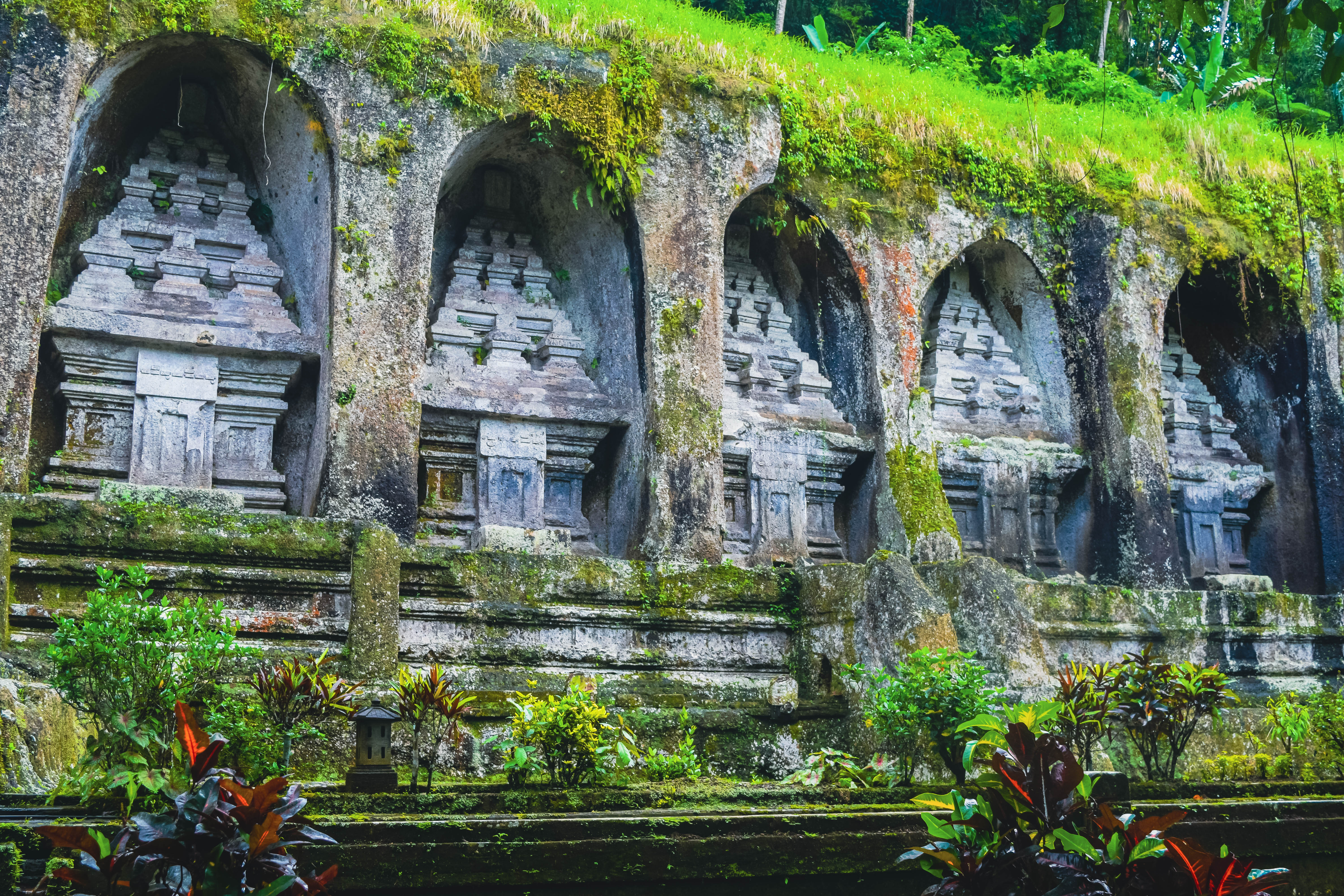
The complex contains ten large shrines carved into the rock. Each structure rises approximately seven meters high and resembles a traditional temple tower. Because of these carvings, locals often call the site Candi Gunung Kawi Bali.
Even today, the location remains spiritually important for the Balinese community. Religious ceremonies and offerings still take place within the temple grounds.
The Journey Down the Valley
One of the most memorable parts of visiting the site is the walk down into the valley.
Visitors must descend approximately 300 stone steps before reaching the temple complex. Along the way, the path passes through scenic rice terraces and small local farms. As a result, the journey itself becomes part of the experience.
Many travelers stop along the path to enjoy the landscape or take photos of the surrounding countryside. Once visitors reach the bottom of the valley, the towering cliff shrines appear dramatically across the river.
Although the descent feels easy, the return journey requires climbing the same steps back to the entrance. Therefore, comfortable walking shoes are highly recommended.
Why This Temple Complex Is Unique
Several features make this archaeological site different from other temples in Bali.
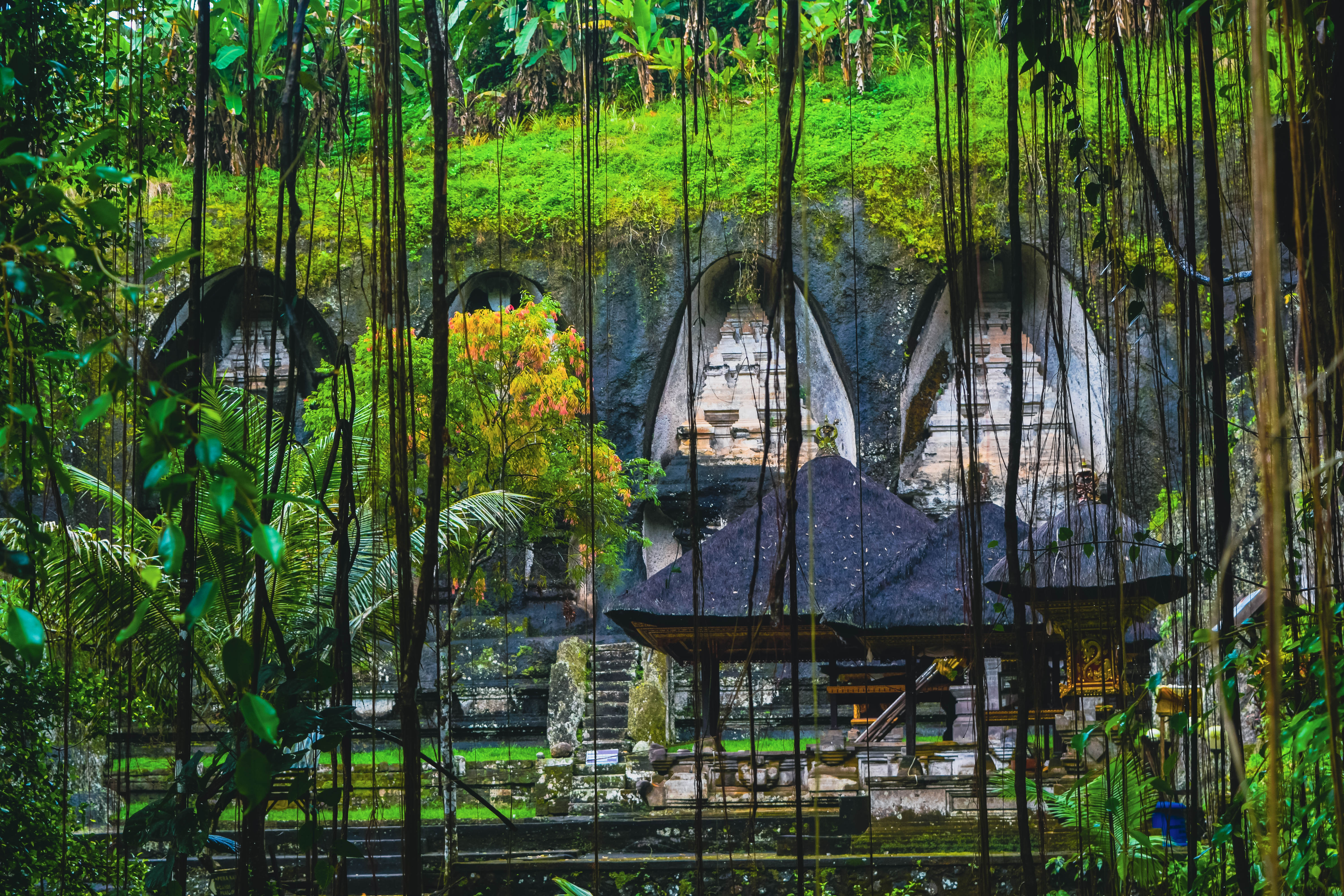
First, the shrines are carved directly into the cliffs rather than constructed using stone blocks. Ancient artisans created these massive structures using simple tools and remarkable craftsmanship.
Second, the temple sits inside a peaceful river valley surrounded by tropical vegetation. Because of this location, the atmosphere feels quiet and secluded compared with other popular temples in Bali.
Finally, the entire landscape adds to the beauty of the site. The combination of ancient carvings, river scenery, and rice fields creates one of the most impressive cultural landscapes in central Bali.

The Sacred Pakerisan River Valley
The temple complex lies within the Pakerisan River valley, one of the most historically important regions in Bali.
Several ancient temples stand along this river, which once served as a center of early Balinese civilization. Historians believe this area played a key role in the political and religious life of the island during the early kingdom period.
Today, visitors can still feel the peaceful atmosphere of the valley. The sound of flowing water, the shade of coconut trees, and the presence of ancient shrines create a memorable cultural experience.
How to Get to Candi Gunung Kawi Bali
The temple complex is located near Tampaksiring village in Gianyar Regency.
Travel time from major destinations:
Ubud to the site: about 30 minutes
Denpasar to the site: about 1.5 hours
Seminyak to the site: about 1.5 hours
Most travelers reach the location by private driver or guided cultural tour.
You can also explore this destination as part of a cultural tour in central Bali: Book here
Best Time to Visit
The best time to visit the temple valley is early in the morning.
During the morning hours, temperatures remain cooler and the site feels more peaceful. Additionally, the sunlight highlights the stone carvings and surrounding rice terraces.
Late afternoon also offers beautiful lighting. However, the area becomes busier during midday.
Therefore, arriving early provides the most enjoyable experience.
Nearby Attractions to Explore
Several popular destinations are located near the temple complex.
Visitors often combine the trip with Tirta Empul Temple, famous for its sacred water purification ritual.
Another nearby attraction is the Tegallalang Rice Terraces, one of Bali’s most iconic landscapes.
Travelers interested in temples around Ubud may also enjoy visiting
Puri Saraswati Temple
Another famous temple is Uluwatu Temple, located on dramatic cliffs overlooking the ocean:
For official travel information about Bali, you can also visit:
https://www.indonesia.travel
Travel Tips Before You Visit
- Before visiting this historic site, consider the following tips.
- Wear comfortable shoes because the temple requires walking down and up several hundred steps.
- Bring water, especially during warm weather.
- Visit early in the morning for a quieter atmosphere and better photography conditions.
- Respect temple customs by wearing appropriate clothing and avoiding restricted areas.
- Finally, take time to enjoy the surrounding valley. The landscape plays an important role in the beauty of the site.
Conclusion
Gunung Kawi Bali remains one of the most impressive historical sites on the island. The monumental cliff shrines, peaceful valley setting, and rich cultural heritage make this destination a must-visit for travelers interested in Bali’s ancient history.
For visitors exploring the cultural heart of Bali, this ancient temple complex offers a unique journey through history, spirituality, and natural beauty.

FAQ
What is Gunung Kawi Bali?
Gunung Kawi Bali is an ancient temple complex known for its large cliff carvings located near Tampaksiring in central Bali.
How many shrines are at the site?
The complex contains ten large rock-cut shrines carved directly into the cliff walls.
How many steps lead to the temple valley?
Visitors must walk down approximately 300 steps to reach the temple area.
Where is Gunung Kawi located?
The temple is located near Tampaksiring village, about 30 minutes north of Ubud.
What is the entrance fee?
The entrance fee is usually around IDR 50,000 per visitor.
