
Uluwatu Temple, or Pura Luhur Uluwatu, is one of Bali’s major sea temples and one of the island’s most recognizable sacred landscapes. It sits on a limestone cliff in Pecatu, roughly 70 metres above the Indian Ocean.
This version is intentionally more culture- and history-focused than our separate complete Uluwatu visitor guide. It explains the temple’s religious importance, the figures associated with its history, what tourists can actually access, and how to visit respectfully in 2026.
Uluwatu is not simply a sunset viewpoint. It is an active Balinese Hindu temple associated with Bali’s network of important protective temples and with the spiritual legacy of priests including Mpu Kuturan and Dang Hyang Nirartha.
For visitors in 2026, Indonesia Travel lists tourist hours at 07:00–19:00 and entrance at IDR 60,000 adult / IDR 40,000 child for international visitors. The Kecak performance is a separate ticket.
Prefer temple, Kecak and dinner arranged together?
The current Kura-Kura Bus package includes private transport, licensed guide, Uluwatu admission, skip-the-line Kecak ticket, sarong, and a Jimbaran lobster seafood dinner.
What Is Uluwatu Temple?
Pura Luhur Uluwatu is a Balinese Hindu sea temple set on the southwestern edge of the Bukit Peninsula.
.webp)
The temple is commonly counted among Bali’s important directional or protective temples and is linked with the worship of divine power associated with Rudra. Its religious importance comes before its tourism role.
For most visitors, the experience is a combination of the cliff path, views toward the sea temple, sunset, macaques and the nearby Kecak performance. The innermost sacred areas are not ordinary sightseeing space.
The History & Spiritual Meaning of Uluwatu
Uluwatu’s history is layered rather than tied to one simple construction date. Balinese tradition connects the development of the temple with important Hindu religious figures who shaped ritual life on the island.
Tradition links the Javanese priest Mpu Kuturan with the early development of Uluwatu and with wider religious organization in Bali around the 11th century.
The 16th-century priest is strongly associated with Uluwatu. Balinese tradition says he meditated here and reached moksha.
Whatever the visitor traffic, Uluwatu remains a functioning place of worship, ceremonies and temple anniversaries.
Where Is Uluwatu Temple?
Uluwatu Temple is in Pecatu, South Kuta, Badung Regency, around 30 km from Denpasar. Indonesia Travel estimates roughly 45 minutes to 1 hour from Ngurah Rai International Airport, around 45 minutes from Kuta or Seminyak, and around 1.5–2 hours from Ubud depending on traffic.
One of the easiest areas to combine with Uluwatu, especially if continuing to dinner.
Allow more time than map distance suggests, particularly in the afternoon.
Treat Uluwatu as a substantial half-day or evening journey rather than a quick side trip.
What to Do at Uluwatu Temple
Explore the coastal route for wide Indian Ocean views and different angles toward the temple.
Late afternoon is the busiest period, but it is also when the cliff light becomes most dramatic.
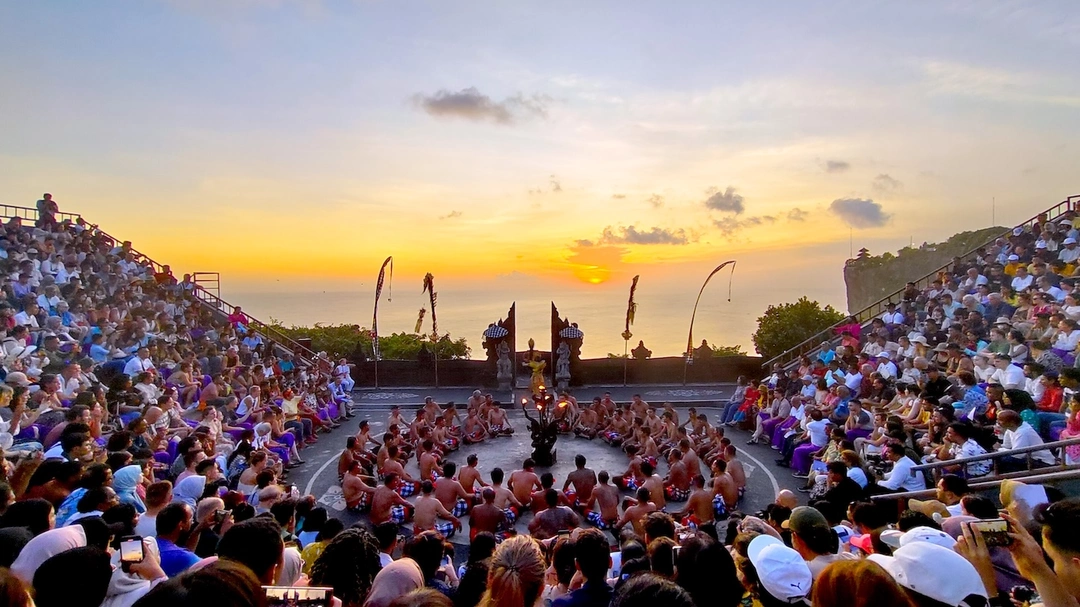
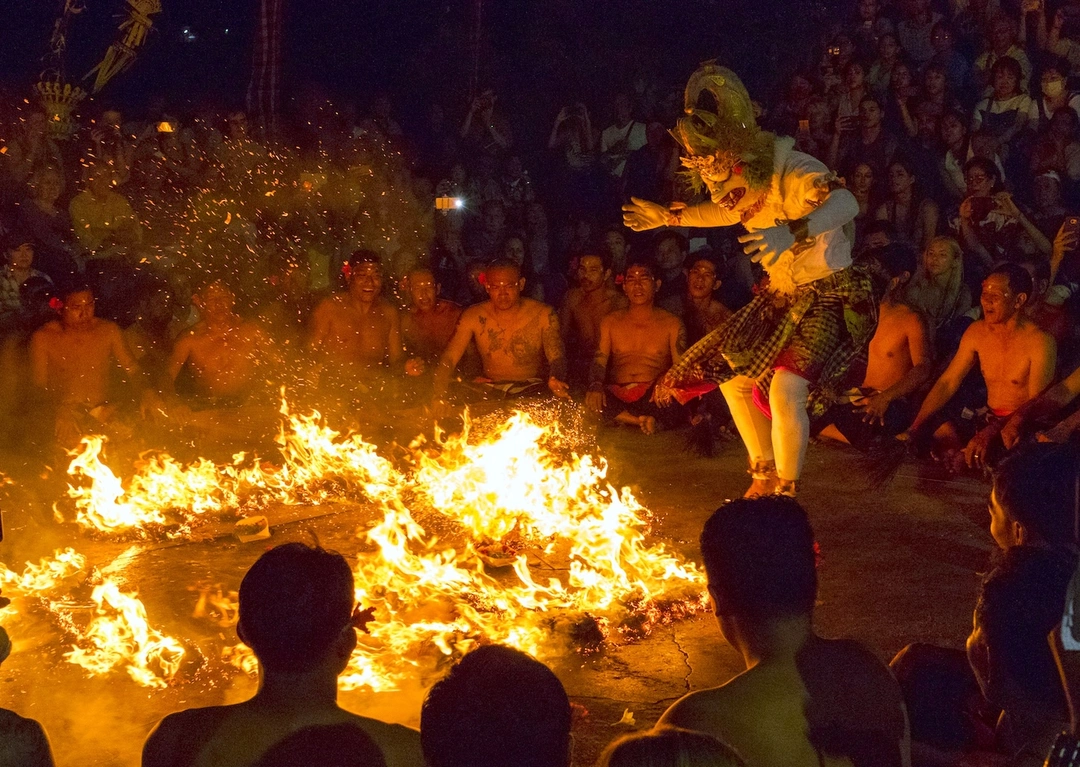
The 18:00 show combines chanting, Ramayana storytelling, fire and the open-air sunset setting.
If a ceremony is taking place, give worshippers space and follow staff instructions. Ceremonies are not staged tourism activities, even when visitors are permitted to observe them.
Uluwatu Temple Entrance Fee & Opening Hours 2026
| Visitor | Adult | Child |
|---|---|---|
| International | IDR 60,000 | IDR 40,000 |
| Domestic | IDR 40,000 | IDR 30,000 |
Indonesia Travel currently lists tourist visiting hours as 07:00–19:00 WITA daily. The temple entrance fee does not include parking or the Kecak performance ticket.
Kecak Dance at Uluwatu Temple

The official Uluwatu Kecak operator currently publishes the main performance at 18:00–19:00 WITA, every day except the day before Nyepi and Nyepi itself.
| Walk-in adult | IDR 150,000 |
|---|---|
| Walk-in child | IDR 75,000, age 4–9 |
| Online adult | IDR 135,000 |
| Online child | IDR 65,000 |
| Main published show | 18:00–19:00 WITA |
The old article said “6:00 PM & 7:00 PM” as though two sessions always operate. The official operator’s published schedule centers on the 18:00–19:00 main performance. Additional sessions can be operated when demand is high, so check the date-specific arrangement.
Dress Code & Temple Etiquette
Wear
- Modest clothing that covers shoulders appropriately
- Sarong and sash when required by temple procedures
- Comfortable footwear for cliff-path walking
- A light layer for wind after sunset
Respect
- Restricted sacred areas
- Temple staff and ceremony instructions
- Worshippers and religious processions
- Rules against climbing sacred structures for photos
Bali’s current visitor rules require foreign tourists to respect temples, sacred symbols, traditions and ceremonies, and to comply with the rules of each attraction.
Monkey Safety at Uluwatu

- Put sunglasses, glasses, hats and loose accessories inside a closed bag.
- Keep food out of sight.
- Do not feed or touch the macaques.
- Do not chase a monkey if it takes an item.
- Ask temple staff or your guide for assistance.
Uluwatu Sunset, Kecak & Jimbaran Dinner

Uluwatu Sunset Kecak Dance & Jimbaran Seafood Dinner
A private approximately 6-hour evening route that combines the temple, sunset, skip-the-line Kecak ticket and Jimbaran dinner.
- Private hotel pickup and drop-off by air-conditioned vehicle
- English-speaking licensed guide
- Uluwatu Temple admission
- Skip-the-line Kecak ticket
- Traditional sarong
- Jimbaran lobster seafood dinner
- Mineral water
- Parking fees and local taxes
- Insurance
- Free cancellation up to 24 hours before the experience starts, Bali time
Frequently Asked Questions About Uluwatu Temple
What is Uluwatu Temple?
Pura Luhur Uluwatu is a Balinese Hindu sea temple in Pecatu, South Bali. It is one of Bali’s major sacred temples and is known for its cliff setting above the Indian Ocean.
How high is the Uluwatu cliff?
The temple complex sits on a limestone cliff roughly 70 metres above the Indian Ocean.
What are the current opening hours?
Indonesia Travel currently lists visitor hours as 07:00–19:00 WITA daily.
How much is the entrance fee in 2026?
Indonesia Travel currently lists international admission at IDR 60,000 for adults and IDR 40,000 for children, and domestic admission at IDR 40,000 for adults and IDR 30,000 for children.
What time is the Kecak Dance?
The official Uluwatu Kecak operator currently publishes the main performance at 18:00–19:00 WITA, every day except the day before Nyepi and Nyepi itself.
How much is the Kecak ticket?
The official operator currently publishes walk-in tickets at IDR 150,000 for adults and IDR 75,000 for children aged 4–9.
What should I wear at Uluwatu Temple?
Wear respectful clothing and follow temple instructions. Sarong and sash services are available for visitors, and restricted sacred areas should not be entered unless permitted.
Are the monkeys dangerous?
They are wild macaques and may grab loose belongings. Secure sunglasses, hats, phones, food and small accessories, keep your distance and ask staff for help if needed.
Planning an Uluwatu visit?
Send us your travel date, number of guests and hotel. We can help you check the current Uluwatu package or browse other Bali cultural tours.
