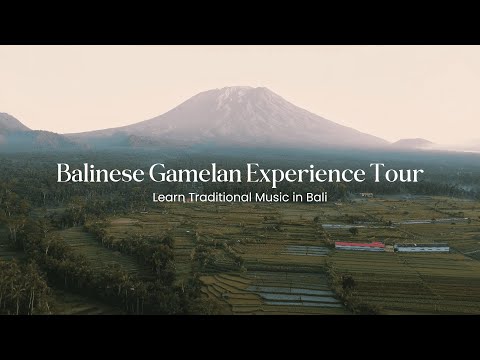
Sunset does not end the day in Bali. It changes how the island can be experienced. Market stalls prepare for evening customers, temple courtyards glow under softer light, performers check costumes, food vendors work over charcoal and steam, and city streets reveal routines that are less visible from a beach or resort.
Bali at night is often reduced to clubs, beach bars, and sunset cocktails. Those can be part of a holiday, but they are not the only story. An evening can also mean traditional dance in Batubulan, a walk through Denpasar’s markets, a conversation about a local ingredient, or a quiet moment observing a temple with the correct etiquette.
This guide compares two organised experiences: An Evening of Bali Traditional Dance and the Bali Private Evening Walking Tour with Culinary Experience. It also explains transport, weather, food, etiquette, photography, and timing so the night feels meaningful rather than rushed.
Two very different ways to spend an evening
| Choose this | Traditional dance evening | Denpasar culinary walk |
|---|---|---|
| Main focus | Performance, story, movement, chorus, and fire | Markets, food tastings, heritage, and everyday city life |
| Setting | Batubulan performance venue | Badung Market and central Denpasar on foot |
| Format | Guided transfer and approximately one-hour performance | Private guided walk with several market and heritage stops |
| Food | Dinner is optional and excluded | Selected Balinese snacks, local food, young coconut, and water included |
| Physical pace | Mostly seated during the performance | Repeated walking and standing in active market areas |
| Best for | Performing-arts, culture, and Ramayana interests | Food, photography, markets, and urban-history interests |
| Important check | Performance programme and pickup surcharge | Dietary needs, walking comfort, and food availability |
Neither experience is objectively better. Traditional dance is stronger if you want to sit with a performance and understand how voice, movement, costume, story, and fire work together. The Denpasar walk is more suitable if you want direct contact with markets, food, urban history, and local evening routines.
Do not combine both on the same night. Each depends on pickup, traffic, and a sequence that deserves attention. Place them on separate evenings if both interest you.
Why Bali feels different after dark
Tropical daylight disappears quickly. The transition from late afternoon to darkness can feel sudden. Temperatures may become more comfortable, but humidity remains and rain is possible in any season.
The social rhythm also changes. Some daytime markets slow down while food activity increases. Office traffic gives way to dinner movement, ceremonies, performances, and people returning home. Denpasar after sunset offers a perspective different from both the midday city and southern Bali’s visitor districts.
After dark, travellers depend more heavily on planning. Street lighting varies, pavements can be uneven, signs are harder to see, and ride pickup points can become confusing. A guided experience is useful because local context and organised transport remove avoidable friction.
Option one: an evening of Balinese traditional dance
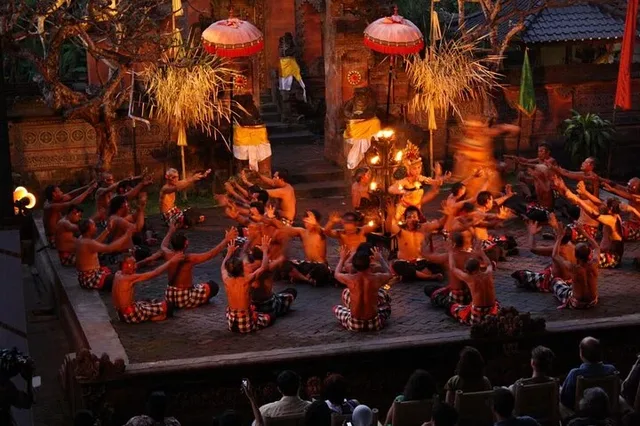
The traditional dance experience travels to Batubulan, a village associated with Balinese performance and stone carving. The current programme describes Sanghyang or trance dance, Kecak, and fire-dance elements, with the principal narrative connected to the Ramayana.
The performance lasts approximately one hour. Hotel pickup, transfer, waiting and seating, an optional restaurant drop, and return transport make the full evening longer. Use the total duration shown for the selected booking rather than the performance length alone.
Current direct information includes air-conditioned transport from eligible areas, an English-speaking licensed guide, entrance fees, tax, and insurance. Meals, drinks, personal expenses, and gratuities are excluded. Confirm the live price, pickup coverage, and programme for your date.
Understanding Kecak before the performance
Kecak is recognisable for its large male chorus, repeated vocal patterns, circular formation, and dramatic rhythm. Unlike many Balinese performances, the most obvious musical force is the human voice rather than a conventional gamelan ensemble.
The visitor-facing version commonly draws on the Ramayana story of Prince Rama, Sita, Ravana, and Hanuman. Knowing the basic relationships helps, but you do not need to memorise every scene. Read the programme if one is available and listen to the guide’s introduction.
Kecak has relationships with older Sanghyang trance traditions, while the form known internationally was also shaped for staged performance in the twentieth century. It is better to recognise both ritual roots and theatrical development than describe every show as an unchanged ancient ceremony.
Watch how attention shifts around the circle, how characters enter the vocal space, and how the chorus changes rhythm to support tension, conflict, and release.
Sanghyang, trance, and the boundary between ritual and stage
Sanghyang traditions are connected to spiritual and community contexts. A staged programme may introduce trance-related movement or imagery, but visitors should avoid sensational claims about what a performer is experiencing.
Follow the guide and venue instructions. Do not enter the performance area, imitate sacred gestures, touch props, or approach a performer during or immediately after a trance-related segment unless invited.
The right attitude is attentive rather than intrusive. A visitor does not need to decode every spiritual meaning in one evening. Respect starts with recognising that some cultural forms have significance beyond entertainment.
Fire, sound, and audience safety
Fire can create one of the most memorable moments, but it requires clear boundaries. Remain in the assigned area, keep aisles open, supervise children, and follow staff instructions if seating or movement changes.
Do not lean into the performance space for a photograph or place bags where people may need to move. Smoke and airborne particles may affect travellers with respiratory sensitivity, so contact the operator before booking if this is a concern.
Wind, rain, venue conditions, performer readiness, and safety requirements may change the fire component. The programme must be allowed to adapt.
How to watch respectfully
Silence notifications, avoid bright screens, and do not hold a phone above other people’s heads for long periods. Flash can distract performers and may be prohibited.
Wait for an appropriate moment before leaving your seat. Walking through the audience during a scene interrupts the experience and can create safety problems in darker venues.
Treat performers as skilled artists rather than photo props. If post-show photographs are offered, follow the venue’s process and do not demand poses or physical contact.
Optional dinner after the dance
The current description allows the guide to drop guests at a local restaurant near their hotel, but dinner is optional and excluded. Confirm the arrangement before the return journey.
Ask where the restaurant is, how you will return afterwards, and whether the driver waits. Do not assume an optional drop means food and return transport are included.
For allergies, dietary restrictions, or children with an early dining limit, choose a restaurant in advance. A performance followed by one comfortable meal is usually better than several distant stops.
Option two: private evening walking and culinary experience
The Denpasar culinary experience is a private guided route through markets, food stops, and heritage landmarks. It suits travellers who want to understand Bali through urban life rather than only beaches or resort districts.
The current route includes Badung Market, Kumbasari or nearby local-market activity, a food-market tasting, Catur Muka Statue, Puputan Badung Square, and Jagatnata Temple. Conditions and food availability can change, so the sequence and samples may vary.
Current inclusions list transport from eligible areas, a licensed English-speaking guide, Balinese snacks and local food, young coconut, mineral water, entrance and parking fees, tax, and insurance. Personal expenses and gratuities are excluded.
Because the experience is private, the pace can be responsive, but private does not mean every market or road can be controlled. Vendors, traffic, temple access, rain, ceremonies, and local events still shape the evening.
Badung Market after sunset
Badung Market is a major centre of trade. Different activities become prominent at different hours, and the evening is useful for observing food vendors and local customers.
Working markets have wet floors, narrow passages, carts, motorcycles, deliveries, and people carrying goods. Stay close enough to hear the guide without blocking trade.
Ask before photographing a vendor at close range. Buying something does not automatically grant permission for a portrait. Wide views of the market atmosphere are often less intrusive, but local instructions take priority.
The guide can explain ingredients and distinguish between food prepared for immediate eating and products intended for household cooking or ceremonies. Context is more valuable than tasting the greatest number of items.
Kumbasari and the relationship between markets
Kumbasari Art Market sits across the river from Badung Market and adds another layer to the city’s commercial life. Crafts, textiles, daily goods, and visitor-oriented products can exist beside local trade.
It is not a museum. Opening patterns, stall activity, and available items change. Bargaining may be appropriate in some transactions, but it should remain calm and respectful. Do not bargain unless you are genuinely considering a purchase.
The relationship between Badung and Kumbasari also helps visitors understand central Denpasar spatially. River, bridges, traffic, markets, vendors, and heritage sites form one urban area rather than isolated attractions.
What food might you taste?
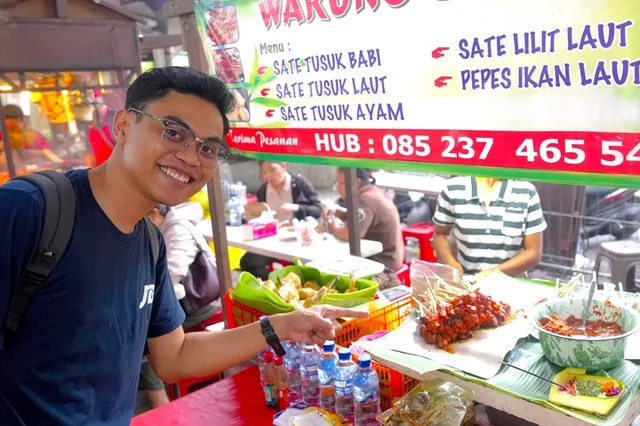
The product gives examples such as klepon, satay, pepes ikan, traditional Balinese snacks, young coconut, and other market foods. These are examples, not a guaranteed fixed menu. Vendor schedules, season, ingredients, ceremonies, and operational decisions may change the tastings.
Klepon is a sweet rice-cake snack commonly filled with liquid palm sugar and coated in coconut. Satay varies by meat, seasoning, preparation, and sauce. Pepes ikan generally involves seasoned fish wrapped for cooking, often in banana leaf.
Ask what an item contains before tasting it. Ingredients may include peanuts, coconut, seafood, fish, shrimp paste, soy, gluten, egg, dairy, meat, or chilli.
If you have a severe allergy, open and shared market preparation may make complete cross-contact control impossible. Contact the operator before booking and make an informed decision rather than relying on an explanation after food is served.
Catur Muka and central Denpasar
The Catur Muka statue stands at an important central intersection. Its four faces are associated with orientation and the city’s centre, making it useful for discussing Denpasar’s identity and layout.
Traffic is part of the environment. Cross only with the guide, remain alert to motorcycles, and do not step into the road for a symmetrical photograph. Night lighting is visually dramatic, but safety matters more than composition.
This stop shifts the evening from food toward civic space. It reminds visitors that Denpasar is Bali’s provincial capital, not simply a service city behind the beach districts.
Puputan Badung Square and historical memory
Puputan Badung Square is connected to Balinese resistance to Dutch colonial forces. The term puputan refers to a collective fight to the end and carries historical and emotional weight.
A short evening stop cannot cover the full history. Listen to the guide, distinguish historical interpretation from simplified legend, and avoid using the square only as a decorative background.
The public space also has a contemporary life. Residents may exercise, gather, or travel through. Respect current use while learning about the past represented there.
Jagatnata Temple at night
Jagatnata Temple provides a quieter conclusion. Access depends on religious activity, ceremonies, opening conditions, and site instructions.
Wear appropriate clothing and use a sarong or sash if required. Speak quietly, remain out of restricted areas, and never stand in front of people praying. Night lighting does not turn a temple into a stage.
The product notes that visitors may encounter canang sellers and may have an opportunity to prepare or present an offering. This is conditional. Any donation is voluntary and should be handled personally with local guidance.
Do not treat an offering as a craft souvenir. Ask what each action means and accept when participation is not appropriate.
Food safety and dietary planning
Market food can be rewarding, but no guide can guarantee every item suits every traveller. Explain allergies, religious dietary needs, vegetarian or vegan preferences, and strong intolerances before the tour date.
Use particular caution with anaphylaxis, coeliac disease, or any condition requiring strict cross-contact controls. Shared grills, utensils, oils, surfaces, sauces, and storage are common.
Choose food served hot where appropriate, follow the guide’s recommendations, and do not feel pressured to finish every tasting. Carry necessary medication and tell your companion how to respond in an emergency.
The included food may not equal a large restaurant dinner for every appetite. Ask how substantial the current tastings are if meal planning matters.
Transport and hotel pickup
Both experiences include transport from specified areas, but pickup coverage differs and surcharges apply. The current dance listing covers central hotels in Kuta, Legian, Tuban, Sanur, Jimbaran, and Tanjung Benoa, with Nusa Dua and more distant areas carrying additional charges.
The culinary listing includes central hotels in Kuta, Legian, Tuban, Sanur, Jimbaran, Tanjung Benoa, and Nusa Dua. Ubud, Canggu, Pecatu, Uluwatu, Tabanan, Tanah Lot, Candidasa, and Singaraja may have higher surcharges or may not be recommended.
Conditions change. Provide the exact hotel name and address. A property marketed as “Ubud” or “Canggu” may sit far from the practical centre.
Evening traffic can be heavy near Denpasar and southern visitor districts. Do not place a fixed dinner, airport transfer, or another ticketed event immediately after the expected return.
What to wear and bring
For the culinary walk, use comfortable shoes with secure soles. Market surfaces may be uneven or wet, and the route requires walking and standing. For the performance, footwear matters less during seating but still helps in a darker venue.
Wear lightweight clothing and carry modest coverage for temple visits. Bring compact rain protection, a small amount of rupiah, insect repellent if needed, and a charged phone with the pickup confirmation saved offline.
Avoid a large bag. Keep valuables close in markets and secure anything that could obstruct an aisle.
If sensitive to sound, smoke, crowds, heat, or strong food aromas, discuss the likely environment before booking. The experiences have different sensory profiles.
Weather and seasonal conditions
Bali remains warm after sunset. Rain can occur all year and is more frequent during the broad wet season. A tropical downpour affects traffic, walking comfort, market movement, venue access, and outdoor performance elements.
The operator may adjust a route, sequence, or programme because of rain, wind, local events, or safety. Carry rain protection even when the afternoon looks clear.
Dry weather does not guarantee an easy journey. Traffic, ceremonies, road restrictions, and holiday demand still affect pickup and return times.
Photography after dark
Night photography is challenging because phones use longer exposure and aggressive processing. Hold the device steady, avoid digital zoom, and accept some movement instead of flashing performers or vendors.
At performances, dim the screen and do not record the entire programme above another person’s view. At markets, request permission for close portraits and never block a transaction.
At temples and ceremonies, rules may be stricter. Do not photograph worshippers closely, climb structures, move offerings, or enter a restricted area for an angle.
Responsible photographs often focus on atmosphere: food preparation with permission, steam above a stall, reflected light, architecture, or the wider performance setting.
Ceremony is not the same as performance
A ticketed dance has a defined audience, venue, and visitor framework. A religious ceremony encountered on the road or near a temple does not.
If a procession delays traffic, remain patient. Do not ask participants to move, pose, or repeat an action. Follow the guide on where to stand and whether photography is appropriate.
Clothing accepted at a visitor performance may not be enough for a temple ceremony. Carry coverage and respond to the situation.
Families, older travellers, and accessibility
Families may prefer the seated structure of the dance, although fire, sound, darkness, and total transport time matter for young children. Supervise children and explain that the performance area is not a place to run.
The culinary walk suits children comfortable with markets, unfamiliar food, and staying close to adults in traffic. Confirm child pricing, food portions, and timing before booking.
Travellers with limited mobility should not assume the walking route is step-free. Markets, pavements, crossings, temple areas, and vehicle access vary. Contact the operator with specific needs rather than asking only whether the tour is “accessible.”
For older travellers, heat and standing may matter more than distance. A private route offers some flexibility, but market and transport schedules still impose limits.
Which evening should you choose?
Choose traditional dance for a focused performance, seated central experience, Ramayana interest, or organised transfer to Batubulan.
Choose the culinary walk for a private experience, guided tasting, Denpasar, local markets, and an active urban environment.
Travellers with serious food allergies may find the dance easier because dinner is optional and can be selected separately. Travellers sensitive to fire, smoke, chanting, or performance volume may prefer the culinary route.
With two evenings, doing both creates contrast: one focuses on staged cultural expression, while the other follows food, trade, history, and temple context.
Building a balanced evening itinerary
Keep the afternoon light. A long day trip from North or East Bali followed by an evening activity is exhausting and vulnerable to traffic. Return to the hotel with time to shower, change, and meet pickup calmly.
Eat only a light meal before the culinary tour unless advised otherwise. For the dance, decide whether to eat before, use the restaurant drop, or dine near the hotel after returning.
Avoid a spa appointment, fixed restaurant seating, or airport transfer immediately after the expected finish. A flexible final hour improves the experience.
The following morning should also be realistic. A pre-dawn hike or early boat transfer may not pair well with a late return.
Common mistakes to avoid
Do not assume “Bali at night” means the same everywhere. Denpasar, Batubulan, Ubud, Seminyak, Sanur, and Uluwatu have different distances, traffic, and evening cultures.
Do not book without confirming the hotel and surcharge. Do not arrive at a food tour without disclosing allergies. Do not treat a temple offering as entertainment. Do not record a performance with a bright screen. Do not expect a fixed menu when markets depend on availability.
Most importantly, do not overfill the evening. One well-guided experience gives more understanding than several rushed stops connected by traffic.
Complete booking checklist
Confirm the date, number and ages of guests, live price, cancellation deadline, exact pickup area, surcharge, pickup window, and expected return. Read the inclusions for the channel where you pay.
For dance, confirm the programme, venue, entrance ticket, dinner exclusion, fire component, and restaurant-drop arrangement. Mention smoke sensitivity, reduced mobility, or young children.
For the culinary walk, disclose allergies and dietary needs in writing. Confirm whether they can be accommodated safely, the walking conditions, food inclusions, and temple clothing requirements.
Save the voucher and WhatsApp contact offline. Reconfirm the day before, charge your phone, prepare rupiah and rain protection, and wait at the agreed location before pickup.
For help choosing, contact Kura-Kura Bus on WhatsApp at +62 812-3729-3689 or email kura_rsv.id@jtbap.com.
Frequently asked questions
Is Bali safe to explore at night?
Many visitors enjoy Bali in the evening, but normal awareness matters. Use organised transport or a reliable return plan, protect valuables, stay alert around traffic, and follow the guide in markets and cultural sites.
How long are the experiences?
The dance performance is approximately one hour, but the tour includes pickup, transfer, venue time, and return. The Denpasar experience includes hotel transport plus walking, tasting, and heritage stops. Check the current total duration at checkout.
Is dinner included with traditional dance?
No. Dinner is currently optional and excluded. A guide may arrange a restaurant drop near the hotel, but confirm transport details.
Is food included on the Denpasar walk?
Selected Balinese snacks, local food, young coconut, and mineral water are included under the current listing. Exact tastings depend on availability.
Can dietary restrictions be accommodated?
Some preferences may be manageable, but open-market preparation makes strict cross-contact control difficult. Contact the operator before booking, especially for severe allergies or coeliac disease.
Is the Denpasar tour private?
Yes, it is currently described as a private evening walking tour. Transport and market conditions still follow local realities.
Can children join?
Both products list child rates, but suitability depends on age, walking comfort, food preferences, duration, and sensitivity to sound, fire, or crowds. Confirm the current policy.
What happens if it rains?
The route, sequence, outdoor component, or timing may change. The operator may cancel or adjust an experience when conditions are unsafe.
Can I photograph the dance and markets?
Photography is possible only within venue and local rules. Avoid flash, request permission for close portraits, keep screens unobtrusive, and never block performers, vendors, worshippers, or guests.
What is the cancellation policy?
Both direct listings currently advertise free cancellation up to 24 hours before the experience begins in Bali time. Confirm the terms at checkout because promotional and third-party conditions can differ.
Let the evening tell one clear story
A memorable night in Bali does not require constant movement. It needs a clear point of attention. In Batubulan, that point is performance: voices, story, costume, trance-related tradition, and fire. In Denpasar, it is the living city: food, markets, historical memory, traffic, worship, and conversation.
Choose the experience that matches your interests, leave enough time for transport, and arrive ready to observe rather than consume everything quickly. Bali after sunset is most rewarding when darkness is not empty time between daytime attractions, but a different way of seeing the island.
Official links and further reading
Check current dance pricing, pickup coverage, programme, and availability on the Kura-Kura Bus traditional-dance page.
Check current Denpasar-walk pricing, food inclusions, dietary conditions, and availability on the Kura-Kura Bus culinary-tour page.
For destination context, read Indonesia Travel’s introductions to Denpasar, Badung Market, and Kecak dance.