
Traveling from Kintamani to Ubud is one of the most rewarding ways to experience two completely different sides of Bali in a single journey.
Kintamani begins the day with cool mountain air, volcanic landscapes, Mount Batur, Lake Batur, and wide highland views. Continue south toward Ubud and the atmosphere gradually changes into rice fields, villages, temples, galleries, cafés, markets, and tropical greenery.
Instead of treating the journey as a simple transfer, travelers can turn the route into part of the experience itself.
Whether you are returning to Ubud after visiting Mount Batur, moving hotels, or planning a highland day trip, this guide explains the easiest ways to travel, what you can see along the way, and how to make your Kintamani to Ubud journey more enjoyable.
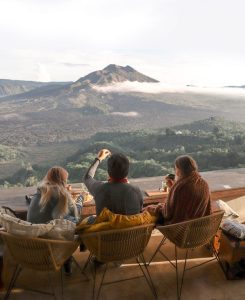
Begin your Kintamani to Ubud journey surrounded by the volcanic scenery of Mount Batur. Image source: Kura-Kura Blog.
Quick Answer: How Do You Travel from Kintamani to Ubud?
The most practical options for traveling from Kintamani to Ubud are a scheduled shared shuttle, private car, or arranged tour transportation.
Kura-Kura Bus currently operates a scheduled route connecting Kintamani with Ubud and onward to South Bali. The Kintamani stop is located at Akasa Coffee, while the Ubud stop is around the central Puri Lukisan Museum area.
- Shared shuttle: suitable for independent travelers looking for scheduled transportation.
- Private car: best when you want hotel-to-hotel transportation or sightseeing stops.
- Tour vehicle: convenient when Kintamani and Ubud are part of a complete Bali sightseeing day.
Always confirm the latest schedule and availability before departure because operating times may change.
Why Is the Kintamani to Ubud Route Worth Doing?
This route is interesting because the scenery changes noticeably as you leave Bali’s volcanic highlands.
Kintamani sits in a cooler mountain environment where Mount Batur and Lake Batur dominate the landscape. As the road descends toward Ubud, the surroundings become greener and more tropical.
Along the wider Central Bali corridor you may encounter coffee-growing areas, agricultural landscapes, traditional villages, temple districts, rice terraces, and smaller roadside communities.
By the time you reach Ubud, the feeling is completely different. Instead of open volcanic scenery, you arrive among cultural landmarks, shops, galleries, temples, restaurants, and rice-field surroundings.
This contrast makes Kintamani to Ubud more than a point-to-point journey.
1. Start Your Journey with the Views of Kintamani
Before leaving Kintamani, take time to enjoy the highland landscape.
The area is best known for views across Mount Batur, Lake Batur, and the surrounding volcanic caldera. Cafés and viewpoints along the highland road make it easy to stop for coffee while looking across the mountain scenery.
Akasa Coffee is also an important transportation point because it currently serves as the Kintamani stop for Kura-Kura Bus.
If you have enough time before traveling toward Ubud, use the stop to enjoy the cooler air rather than arriving immediately before departure.
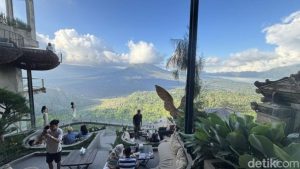
Kintamani’s café viewpoints provide an easy place to pause before continuing toward Ubud. Image source: Kura-Kura Blog.
2. Watch the Landscape Change on the Way to Ubud
The road from Kintamani to Ubud gradually descends from the highlands toward Central Bali.
This part of the journey is easy to overlook if you focus only on the final destination, but the changing scenery is one of the route’s strongest features.
You move from wide mountain views into increasingly lush countryside, with tropical vegetation, farmland, village roads, temples, and rice-growing areas appearing along the way.
Travelers using a private vehicle can turn the journey into a flexible sightseeing route, while those using scheduled transportation can simply sit back and watch Bali change through the window.
3. Consider a Temple Stop Between Kintamani and Ubud
If you are traveling by private vehicle, Central Bali gives you several opportunities to add a cultural stop before reaching Ubud.
The Tampaksiring area is particularly useful because it sits naturally between the highlands and greater Ubud.
Tirta Empul is known for its sacred spring complex, while Gunung Kawi offers an archaeological landscape with ancient shrines carved into the cliffs beside the Pakerisan River valley.
These sites work particularly well for travelers who want their Kintamani journey to include more than mountain viewpoints.
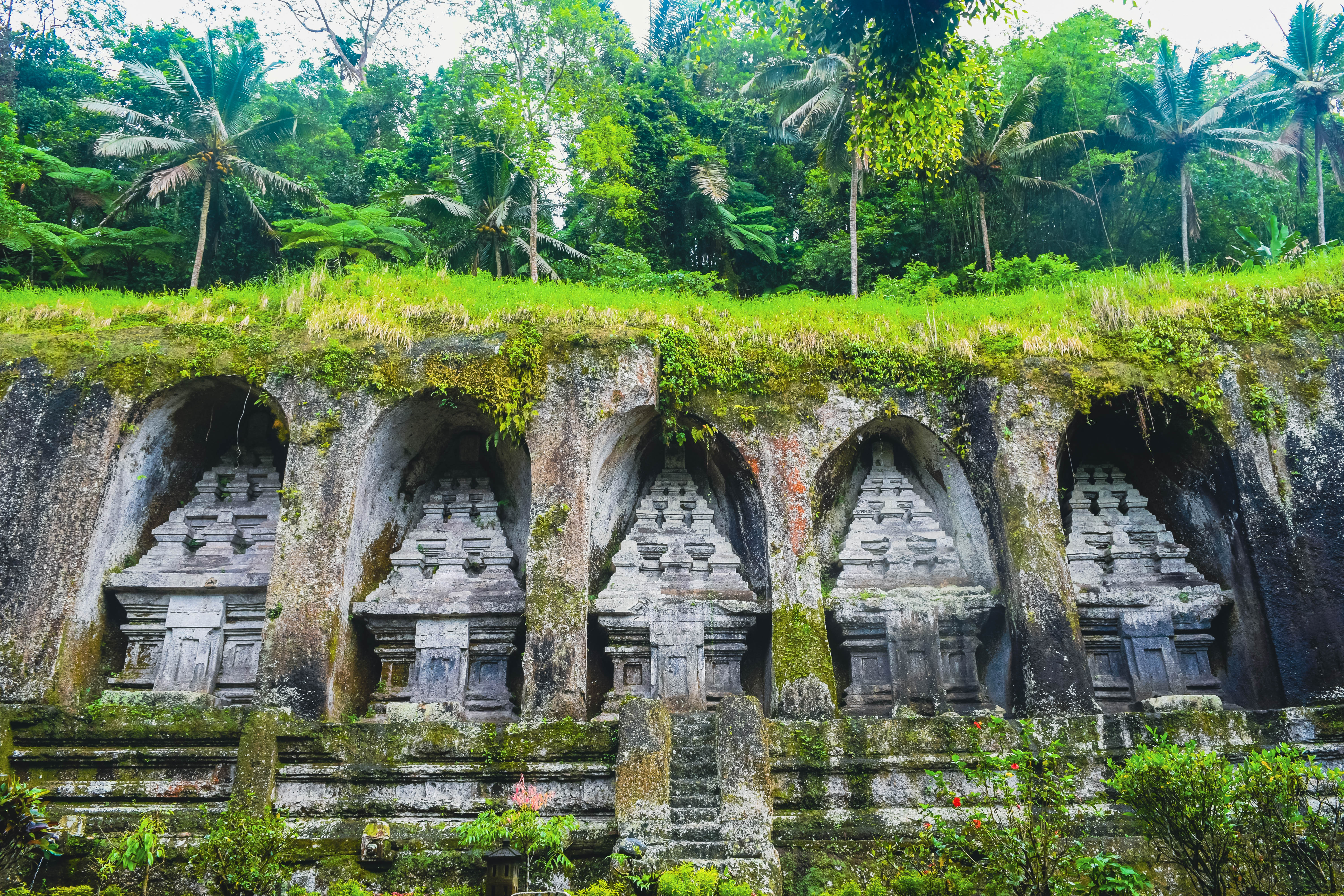
Central Bali’s temple landscape can add a cultural dimension to a private Kintamani to Ubud journey. Image source: Kura-Kura Blog.
4. Add Tegalalang If You Want a Rice Terrace Stop
Tegalalang is one of the easiest areas to associate with the transition from the northern Ubud countryside into the cultural center.
The landscape is known for layered rice terraces, tropical valleys, cafés, photo viewpoints, and several recreational attractions.
If you are using a private car from Kintamani to Ubud, stopping here can create a natural break between the mountain scenery and central Ubud.
Try not to overload the route with too many stops. Spending meaningful time at one terrace is usually better than rushing through several similar places.
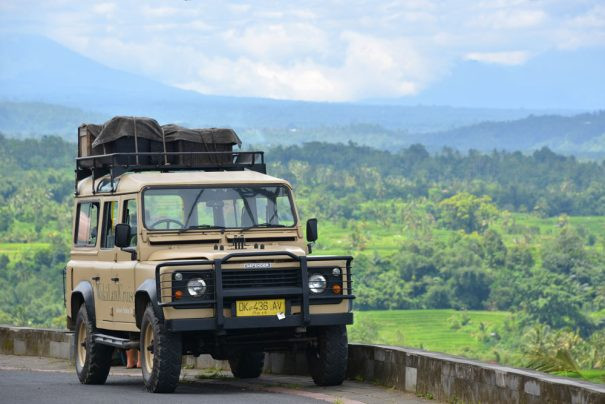
Bali’s rice-field landscape creates a very different atmosphere from Kintamani’s volcanic highlands. Image source: Kura-Kura Blog.
5. Arrive in Central Ubud and Continue on Foot
Central Ubud is compact enough that several major attractions can be explored on foot once you arrive.
Kura-Kura Bus currently uses the Puri Lukisan Museum area as one of its central Ubud stops, placing travelers close to several cultural landmarks.
From this part of Ubud, you can continue toward:
- Museum Puri Lukisan: a useful introduction to Balinese art.
- Ubud Palace: traditional architecture in the center of town.
- Saraswati Temple: famous for its lotus pond and ornate Balinese design.
- Ubud Art Market: handicrafts, clothing, souvenirs, and local products.
- Restaurants and cafés: easy options for a break after arriving from Kintamani.
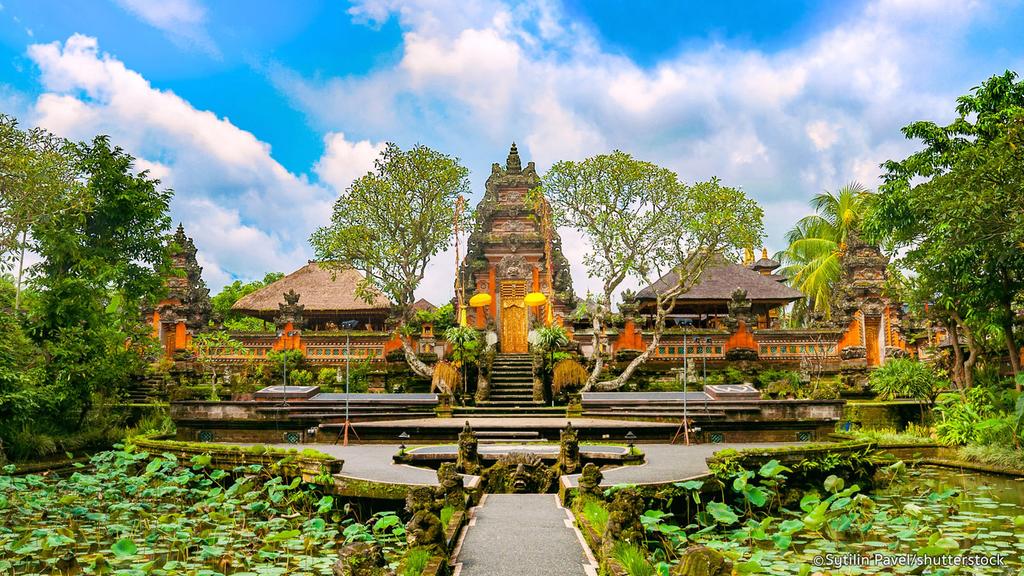
Ubud replaces Kintamani’s mountain scenery with temples, art, culture, and tropical surroundings. Image source: Kura-Kura Blog.
What Is the Best Transportation from Kintamani to Ubud?
The best option depends on your budget, schedule, luggage, and how much flexibility you need.
Scheduled Shared Shuttle
A scheduled shared service is useful for solo travelers, couples, and visitors who do not need door-to-door transportation.
Kura-Kura Bus currently operates a route from Kintamani through Ubud and onward toward South Bali. Reservations are required, so booking ahead is recommended.
Private Car
A private vehicle gives you the most flexibility.
You can arrange direct hotel transportation or add stops around temples, rice terraces, restaurants, coffee plantations, and viewpoints.
This is especially practical for families, small groups, travelers carrying luggage, or guests moving between hotels.
Private Tour
If Kintamani is part of a sightseeing day rather than simply a transfer, a guided tour may be the easiest option.
The itinerary can combine volcanic scenery, temples, countryside, and Ubud attractions without requiring you to arrange transportation between each destination separately.
Can You Take Kura-Kura Bus from Kintamani to Ubud?
Yes. Kura-Kura Bus currently lists a scheduled Kintamani to Ubud to Kuta route.
The current route uses:
- Kintamani stop: Akasa Coffee Kintamani
- Ubud stop: Puri Lukisan Museum area
The published schedule currently shows the bus leaving Akasa Coffee in the afternoon and continuing to Ubud before traveling onward toward South Bali.
However, bus schedules, stops, fares, seat availability, and operating days may change. Check the official booking page for your actual travel date before planning activities around the departure time.
Sample Kintamani to Ubud Day Plan
If you want the route to feel like part of your Bali holiday rather than only transportation, keep the itinerary simple.
- Morning – Kintamani: enjoy Mount Batur and Lake Batur views, coffee, or a highland breakfast.
- Late morning – Scenic drive: begin descending through Central Bali.
- Midday – Cultural stop: visit Tirta Empul or Gunung Kawi if traveling privately.
- Early afternoon – Ubud countryside: stop around Tegalalang if time allows.
- Afternoon – Central Ubud: explore Ubud Palace, Saraswati Temple, Museum Puri Lukisan, or Ubud Art Market.
- Evening – Ubud: stay for dinner, shopping, or a traditional cultural performance.
This route gives you mountain scenery, culture, countryside, and central Ubud without trying to cover too much territory in one day.
Should You Travel Directly or Stop Along the Way?
A direct journey is best when Ubud is your next hotel destination or when you already spent a full day exploring Kintamani.
A sightseeing transfer makes more sense when you have not yet explored Central Bali.
Choose a direct transfer if:
- you are carrying luggage
- you want to reach Ubud before check-in or dinner
- you already visited the main Central Bali attractions
- you prefer a slower afternoon in Ubud
Choose sightseeing stops if:
- you have a full day available
- you are traveling by private vehicle
- you want to visit temples or rice terraces
- this is your first trip through Central Bali
Who Is the Kintamani to Ubud Route Good For?
- Solo travelers: scheduled transport can reduce the need to arrange an entire private vehicle.
- Couples: combine mountain scenery, coffee, rice fields, and Ubud dining.
- Families: a private vehicle makes sightseeing stops and luggage handling easier.
- First-time Bali visitors: experience both the volcanic highlands and cultural heart of the island.
- Photographers: enjoy completely different landscapes within the same travel day.
- Slow travelers: stay in Kintamani before continuing to Ubud instead of returning immediately to South Bali.
Travel Tips for Kintamani to Ubud
- Check the weather: mountain visibility around Kintamani can change quickly.
- Bring a light layer: Kintamani can feel noticeably cooler than Ubud and South Bali.
- Book shared transport in advance: scheduled services require reservations and seats are limited.
- Allow enough road time: Bali traffic can affect journey duration, particularly closer to Ubud.
- Do not overschedule: one or two meaningful stops are usually enough between Kintamani and Ubud.
- Keep temple clothing handy: respectful dress may be required when visiting religious sites.
- Carry water: even though Kintamani is cooler, the day can become warm as you approach Ubud.
- Confirm your drop-off point: shared buses use designated stops rather than individual hotels.
Why Kintamani and Ubud Work So Well Together
Kintamani and Ubud are close enough to combine geographically, yet different enough to make the day feel varied.
Kintamani contributes:
- Mount Batur
- Lake Batur
- cooler mountain air
- volcanic scenery
- coffee viewpoints
Ubud contributes:
- temples
- art and crafts
- rice-field landscapes
- markets
- restaurants and cafés
- traditional performances
Traveling from one to the other creates a natural transition from Bali’s volcanic landscape to its cultural center.
Explore Kintamani and Ubud with Kura-Kura Bus
Kura-Kura Bus provides scheduled shared transportation connecting South Bali, Ubud, and Kintamani, making it possible to explore these areas without arranging a private car for every journey.
Travelers who prefer a more complete experience can also explore Kura-Kura Bus tours covering Ubud, Kintamani, Mount Batur, temples, countryside experiences, and other Bali attractions.
Schedules, fares, routes, tour availability, and operating conditions can change, so always check the official booking page before traveling.
Frequently Asked Questions About Kintamani to Ubud
How Do I Get from Kintamani to Ubud?
You can travel from Kintamani to Ubud by scheduled shared shuttle, private car, or arranged tour transportation. Kura-Kura Bus currently provides a scheduled Kintamani–Ubud connection as part of its Kintamani to Ubud to Kuta route.
Is There a Bus from Kintamani to Ubud?
Yes. Kura-Kura Bus currently lists a scheduled service departing from Akasa Coffee Kintamani and stopping around Puri Lukisan Museum in central Ubud. Check the latest schedule for your travel date before booking.
How Long Does Kintamani to Ubud Take?
Travel time depends on your starting point, traffic, route, and whether you make sightseeing stops. Scheduled transport may also take longer than a direct private transfer because it follows fixed stops and timings.
Can I Visit Kintamani and Ubud in One Day?
Yes. Kintamani and Ubud can work well in the same itinerary. Start with the highlands and Mount Batur scenery before continuing toward temples, rice terraces, and central Ubud.
Is Kintamani Worth Visiting Before Ubud?
Yes, particularly if you want to see a different side of Bali. Kintamani offers volcanic landscapes and cooler highland scenery, while Ubud is known for culture, art, temples, rice fields, and village surroundings.
Where Does the Kintamani Bus Stop?
Kura-Kura Bus currently uses Akasa Coffee as its Kintamani stop.
Where Does the Bus Stop in Ubud?
The current Kintamani route includes a stop around Puri Lukisan Museum in central Ubud, placing travelers within easy reach of several major cultural attractions.
Make the Journey from Kintamani to Ubud Part of Your Bali Experience
connects two of Central Bali’s most recognizable landscapes.
Start among the cooler mountain scenery overlooking Mount Batur, pause for coffee above the caldera, descend through Bali’s green countryside, and finish the journey among Ubud’s temples, markets, galleries, restaurants, and rice-field surroundings.
You can keep the journey simple with scheduled transportation or turn it into a full sightseeing route with a private vehicle.
Either way, the best approach is not to rush. Allow enough time to appreciate how dramatically Bali changes between its volcanic highlands and its cultural center.
Check Kintamani to Ubud Bus Explore Bali Tours