
In the center of Ubud, surrounded by art galleries, traditional markets, and cultural landmarks, stands one of Bali’s most charming temples. Puri Saraswati Temple, widely known as the Ubud Lotus Temple, offers visitors a peaceful sanctuary filled with Balinese architecture, spiritual meaning, and a beautiful lotus pond that has become one of the most photographed spots in Ubud.
While Ubud is famous for its lush rice terraces, vibrant arts scene, and cultural heritage, Puri Saraswati Temple represents the spiritual heart of the area. The temple combines artistic design, religious significance, and a serene atmosphere that attracts both worshippers and travelers who want to experience the beauty of Balinese temple architecture.
Whether you are visiting Ubud for the first time or exploring Bali’s cultural landmarks, Puri Saraswati is a destination that offers a deeper understanding of the island’s traditions and spirituality.

The History of Puri Saraswati Temple
Puri Saraswati Temple was built in 1951 and designed by the renowned Balinese artist and architect I Gusti Nyoman Lempad. Lempad was one of the most influential artists in Bali during the early twentieth century and played an important role in shaping the artistic identity of Ubud.
The temple was commissioned by the royal family of Ubud as a place dedicated to Saraswati, the Hindu goddess of knowledge, wisdom, literature, and the arts. This dedication reflects the strong connection between spirituality and creativity in Balinese culture.
Ubud itself has long been considered the cultural center of Bali. Artists, dancers, musicians, and craftsmen have lived and worked here for generations. By dedicating this temple to Saraswati, the community celebrates the importance of learning, creativity, and artistic expression.
The temple architecture showcases traditional Balinese design elements such as carved sandstone walls, intricate reliefs, and beautifully decorated gates. Every detail reflects the craftsmanship and artistic tradition that Bali is known for.

The Spiritual Meaning of Saraswati Temple
Puri Saraswati Temple is more than just a scenic attraction. It is an active place of worship for Balinese Hindus and holds deep spiritual meaning.
In Hindu belief, Saraswati is the goddess of knowledge, learning, music, and the arts. She represents wisdom and intellectual clarity. Students, teachers, artists, and scholars often pray to Saraswati for inspiration and guidance.
One of the most important religious celebrations connected to the temple is Saraswati Day. This ceremony occurs every 210 days according to the Balinese calendar. On this day, Balinese Hindus give thanks for knowledge and pray for wisdom.
During Saraswati Day, books, sacred texts, and learning materials are placed on family shrines or temples as offerings. Schools and temples across Bali hold ceremonies to honor the goddess.
At Puri Saraswati Temple, the celebration becomes especially meaningful because the temple is directly dedicated to this revered deity.
The Famous Lotus Pond
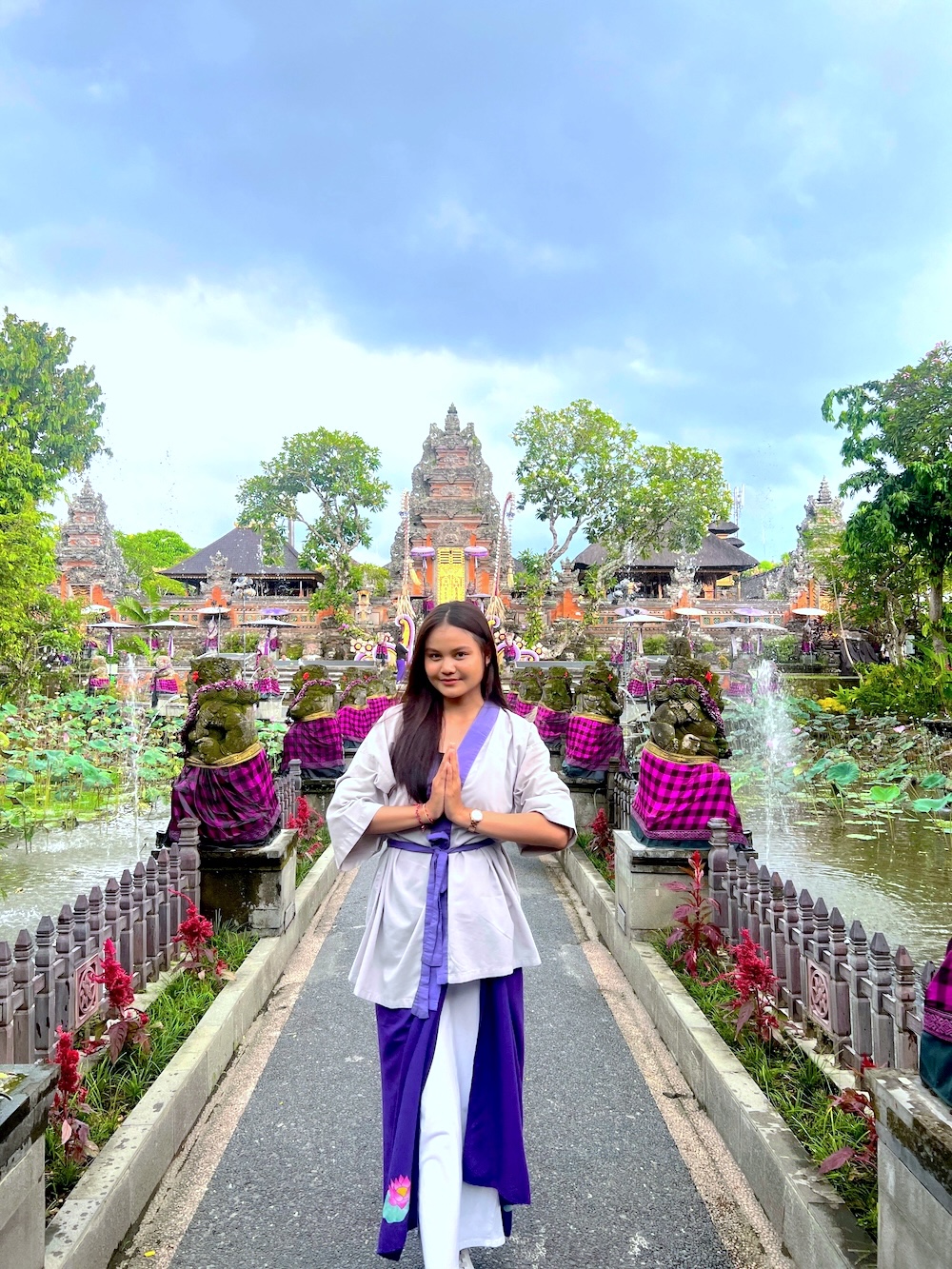
One of the most striking features of Puri Saraswati Temple is the large lotus pond located at the entrance. This pond is filled with blooming pink lotus flowers that create a beautiful pathway leading toward the temple gates.
The lotus flower holds symbolic meaning in Hindu culture. It represents purity, enlightenment, and spiritual growth. Despite growing in muddy water, the lotus blooms beautifully above the surface, symbolizing the human journey toward spiritual awakening.
The lotus pond at Puri Saraswati is often considered one of the most beautiful temple entrances in Bali. Visitors walk along a pathway surrounded by lotus flowers while viewing the temple gate and stone carvings in the background.
Because of its stunning appearance, the lotus pond has become a popular photography location. Many travelers visit the temple specifically to capture photos of the iconic lotus-filled courtyard.
Balinese Architecture and Artistic Design
Puri Saraswati Temple is also admired for its elegant Balinese architecture. The temple complex follows traditional design principles found in many sacred sites across Bali.
Visitors entering the temple will notice the split gateway known as candi bentar. This gate symbolizes the transition between the outside world and the sacred temple space.
Inside the complex, visitors can observe detailed stone carvings, ornamental statues, and decorative shrines that represent various Hindu deities. Each element reflects the skill of Balinese craftsmen and the artistic traditions passed down through generations.
The temple layout also follows the Balinese philosophy of harmony between humans, nature, and the divine. This concept, known as Tri Hita Karana, emphasizes balance in spiritual and social life.
Through its design and symbolism, Puri Saraswati Temple represents the harmony between art, culture, and spirituality that defines Balinese society.
According to Indonesia’s official tourism website, Ubud remains one of Bali’s most important cultural destinations.

Watching the Kecak Dance at Puri Saraswati
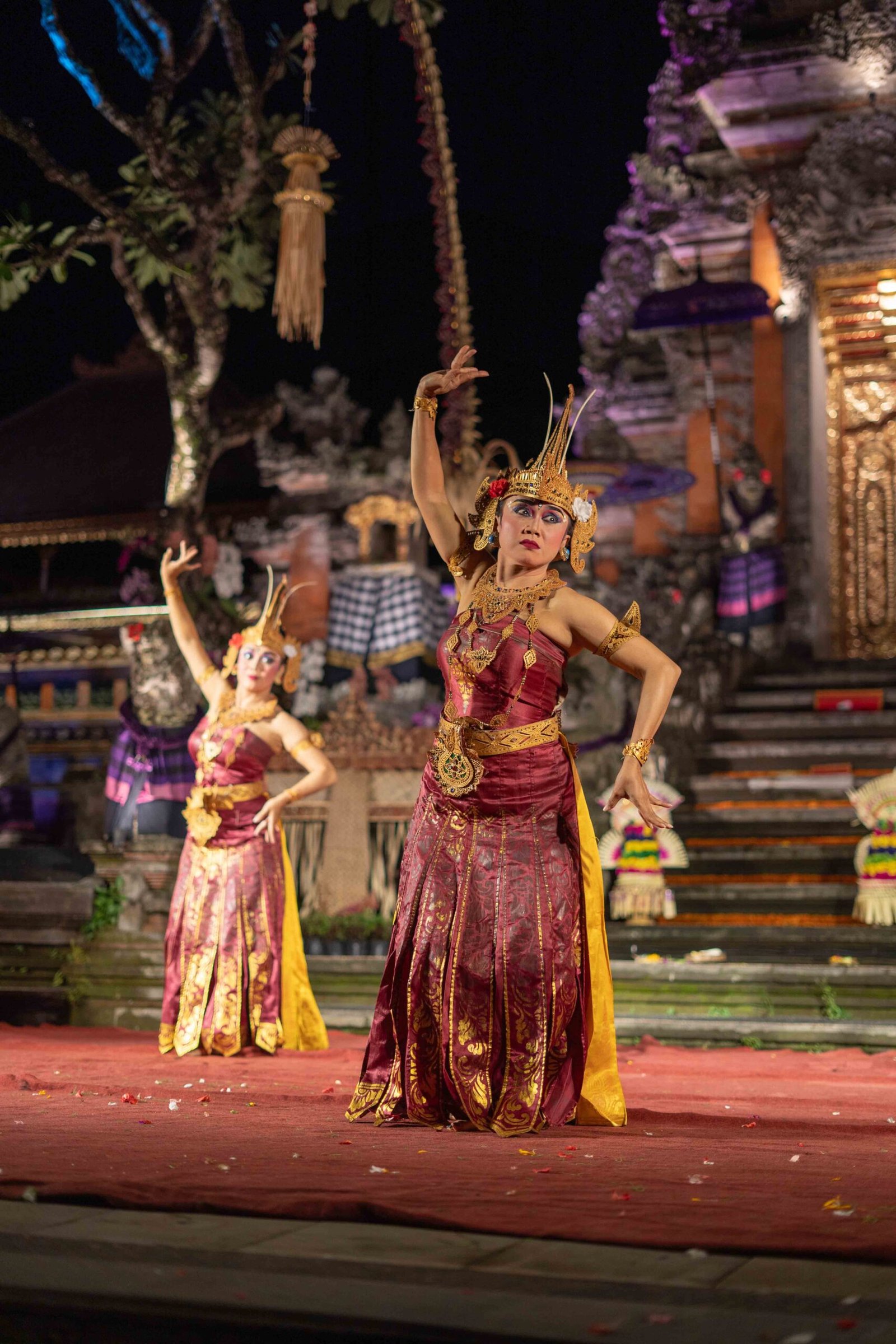
One of the most memorable experiences at Puri Saraswati Temple is the evening Kecak dance performance.
Kecak is a traditional Balinese dance drama inspired by the Ramayana epic. Unlike many other Balinese dances, Kecak does not rely heavily on musical instruments. Instead, a large group of male performers creates rhythmic chanting sounds that accompany the story.
During the performance, dancers sit in a circle and chant “cak cak cak” while narrating scenes from the Ramayana story. The performance typically features characters such as Prince Rama, Princess Sita, Hanuman the monkey god, and the demon king Ravana.
At Puri Saraswati Temple, the dance takes place in the courtyard with the lotus pond in front of the stage. The temple’s architecture and traditional lighting create a magical atmosphere that enhances the storytelling.
For many visitors, watching the Kecak dance here becomes one of the highlights of their visit to Ubud.
If you are interested in Bali temples, you may also want to explore Uluwatu Temple, another iconic cliffside temple with Kecak dance performances. Book here
Location and How to Get There
Puri Saraswati Temple is located in the center of Ubud, making it easy to visit during a walking tour of the area.
Address
Jl. Kajeng, Ubud, Gianyar, Bali
The temple is just a short walk from several well-known attractions including Ubud Palace and Ubud Art Market.
Travel time from popular Bali areas:
Kuta to Ubud: approximately 1.5 hours
Seminyak to Ubud: approximately 1.5 hours
Denpasar to Ubud: approximately 1 hour
Visitors can reach the temple by taxi, private driver, tour services, or shuttle transportation that connects major destinations in Bali.
Because of its central location, many travelers combine their visit to Puri Saraswati with other attractions in Ubud.

Entrance Fee and Opening Hours
Visiting Puri Saraswati Temple is relatively easy and accessible.
Entrance fee
The temple usually allows visitors to enter free of charge, although donations are welcome to help maintain the site.
Opening hours
The temple is generally open daily from around 08:00 AM to 06:00 PM.
For visitors interested in the evening cultural show, tickets are required for the Kecak dance performance.
Best Time to Visit
The best time to visit Puri Saraswati Temple depends on the type of experience you want.
Morning visits offer a quieter atmosphere with fewer crowds. This is also the best time for photography because the lighting is soft and the lotus pond appears especially beautiful.
Late afternoon visits provide a pleasant atmosphere as the sun begins to set over Ubud.
If you plan to watch the Kecak dance performance, arriving early is recommended to secure a good seat.
Dress Code and Temple Etiquette
Since Puri Saraswati is an active temple, visitors are expected to follow respectful dress and behavior guidelines.
Visitors should wear modest clothing that covers the shoulders and knees. In many temples across Bali, guests are required to wear a sarong and sash before entering sacred areas.
It is also important to respect religious ceremonies if they are taking place. Visitors should avoid climbing on temple structures or entering restricted prayer areas.
Following these simple guidelines helps preserve the spiritual atmosphere of the temple.
Attractions Near Puri Saraswati Temple
One of the advantages of visiting Puri Saraswati is its location in central Ubud, where many attractions are within walking distance. Nearby places to explore include Ubud Palace, the historic residence of the royal family of Ubud. Visitors can also explore Ubud Art Market, where local artisans sell traditional crafts, textiles, and souvenirs.
Nature lovers may enjoy visiting the Sacred Monkey Forest Sanctuary or walking along the scenic Campuhan Ridge Walk. Visitors can combine their visit with the nearby Sacred Monkey Forest Sanctuary.
Read our complete guide to the Ubud Monkey Forest to learn what to expect.
These nearby attractions make it easy to spend an entire day exploring the cultural heart of Ubud.
Travel Tips for Visiting Puri Saraswati
Visitors planning a trip to Puri Saraswati Temple may find the following tips helpful.
Arrive early in the morning to avoid crowds and capture the best photos of the lotus pond.
Bring a camera with a wide-angle lens to photograph the temple gate and lotus pond together.
If you want to watch the Kecak dance performance, purchase tickets in advance and arrive early for seating.
Consider combining your visit with a cultural walking tour through Ubud to experience nearby temples, markets, and art galleries.
Conclusion
Puri Saraswati Temple is one of the most beautiful and culturally significant temples in Ubud. With its iconic lotus pond, elegant Balinese architecture, and meaningful spiritual heritage, the temple offers visitors a unique glimpse into the traditions of Bali.
Whether you come to admire the architecture, photograph the lotus pond, or watch the mesmerizing Kecak dance performance, Puri Saraswati Temple remains a must visit destination in the heart of Ubud.
For travelers seeking culture, beauty, and a deeper connection to Balinese heritage, this peaceful temple provides an unforgettable experience.
FAQ
Q: Where is Puri Saraswati Temple located?
A: Puri Saraswati Temple is located in central Ubud on Jalan Kajeng, just a short walk from Ubud Palace and Ubud Art Market.
Q: Is there an entrance fee for Puri Saraswati Temple?
A: Visitors can usually enter the temple free of charge, although donations are welcome to help maintain the temple.
Q: Why is Puri Saraswati Temple called the Lotus Temple?
A: The temple is famous for its large lotus pond at the entrance, which creates a beautiful pathway leading to the temple gate.
Q: Can visitors watch a dance performance at Puri Saraswati Temple?
A: Yes. Evening Kecak dance performances are often held in the temple courtyard and are popular among visitors.
Q: What is the best time to visit Puri Saraswati Temple?
A: Early morning or late afternoon are the best times to visit because the temple is less crowded and the lighting is ideal for photography.
