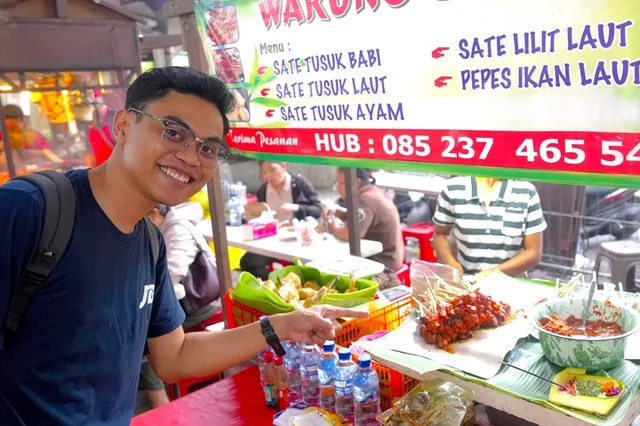
For many travellers, Labuan Bajo appears first as a line in an itinerary: land at the airport, sleep near the harbour, board a boat for Komodo National Park, and leave. The islands are extraordinary, but treating the town only as a departure point misses the place that makes those journeys possible.
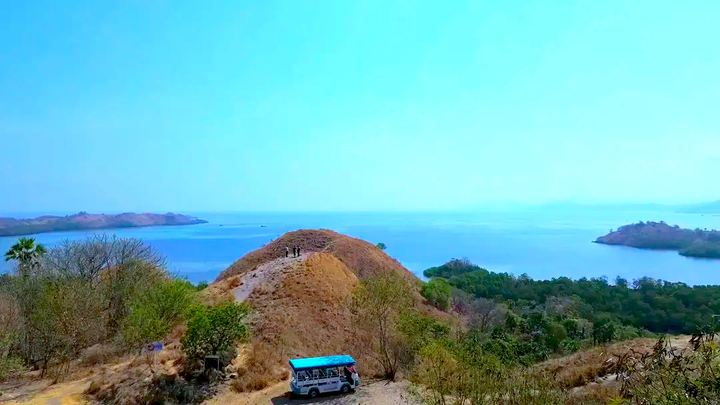
Labuan Bajo is a fast-changing coastal town where fishing, faith, education, tourism, trade, waste management, and ambitious development occupy the same landscape. Hilltop viewpoints look across beautiful islands, while the streets below reveal the work and communities behind an international destination.
The Labuan Bajo Urban Discovery Tour is designed around that contrast. In approximately four hours, a shared smart buggy connects scenic viewpoints with a vocational school, recycling initiative, places of worship, an everyday store, and a working fish market. The result is not simply city sightseeing. It is a guided introduction to the town behind the Komodo gateway.
Why this is called a tale of two cities
“A tale of two cities” does not mean Labuan Bajo is literally divided into two separate towns. It describes two ways visitors may experience the same place.
One version is visible from a resort terrace or boat deck: a harbour framed by green hills, new hotels, restaurants, marinas, and vessels preparing for the islands. This is the Labuan Bajo promoted internationally—a destination of sunsets, sailing, manta rays, and Komodo dragons.
The other version is lived every day by residents: students preparing for tourism careers, people managing the waste created by a growing destination, families practising different faiths, shoppers comparing ordinary prices, fishermen landing and selling seafood, and workers navigating a town transformed by visitor demand.
Neither story is complete on its own. The scenic harbour is real, and so are the systems and communities that support it. The value of an urban discovery tour is the opportunity to hold both views at once.
The experience at a glance
| Experience | Guided Labuan Bajo urban discovery by shared smart buggy |
|---|---|
| Duration | Approximately 4 hours |
| Departures | Morning or afternoon, subject to the selected product and availability |
| Pickup | Hotel pickup and drop-off within the Labuan Bajo area |
| Guiding | Live English-speaking guide plus English/Japanese on-screen virtual guide |
| Group style | Shared small-group buggy; current capacity should be confirmed when booking |
| Signature extra | Personal drone souvenir photos at Sylvia Hill, subject to weather and flight safety |
| Best for | Travellers who want to understand Labuan Bajo beyond the Komodo boat route |
The route and timing may change because of weather, traffic, local conditions, operational requirements, or buggy readiness. Drone souvenir photos are subject to weather and aviation safety. Live prices, child offers, group size, solo booking conditions, and departure availability can also change, so verify the current official listing rather than relying on an old screenshot.
Where Labuan Bajo is—and why the town matters
Labuan Bajo sits on the western edge of Flores in East Nusa Tenggara, facing a chain of islands across the Flores Sea. Its airport, harbour, accommodation, restaurants, shops, guides, transport providers, and marine operators make it the main visitor gateway to Komodo National Park.
Gateway towns carry a particular pressure. Visitors may arrive in large numbers but spend most of their attention elsewhere. At the same time, the town must provide housing, employment, training, water, transport, food distribution, waste services, and public space for residents and a growing tourism economy.
Understanding Labuan Bajo therefore improves a Komodo journey rather than competing with it. A traveller who has seen the fish market, looked over the harbour from Puncak Waringin, and heard about local tourism education boards a boat with a clearer sense of the place from which the voyage begins.
Why explore by smart buggy?
The shared smart buggy gives the experience a more open and social feeling than a conventional coach. It is compact enough for an urban route, keeps the group relatively small, and allows the changing character of the streets to remain visible between stops.
The buggy is not the main attraction. Its purpose is to connect places that explain the town. During transfers, the guide can add context about neighbourhoods, development, daily movement, and the relationship between each stop. The on-screen virtual guide provides additional English and Japanese interpretation.
Because the vehicle is shared, expect to travel with other guests unless your booking states otherwise. Follow the guide’s seating and safety instructions, keep belongings secure, and be considerate when the group needs to leave or reboard efficiently.
Current listings have shown different buggy capacities as the product has developed. Confirm the maximum group size and minimum booking condition for your selected departure rather than assuming information from an older platform listing still applies.
Stop one: Sylvia Hill and the geography of the harbour
Sylvia Hill provides the visual introduction. From the elevated viewpoint, the coastline folds around the harbour and the islands extend into the distance. The view helps explain why Labuan Bajo became a maritime gateway: land, sheltered water, boats, and island routes are visible in one panorama.
This is also where personal drone souvenir photos are planned. Aerial imagery can show the curve of the hills and water in a way that an ordinary phone photograph cannot. However, drone operation depends on wind, rain, visibility, equipment readiness, local conditions, and flight-safety requirements. Treat it as a valuable inclusion when conditions permit, not as an unconditional guarantee.
The current product information states that digital drone photos may be shared within up to seven times 24 hours after the tour. Confirm the delivery method with your guide and make sure the team has the correct contact details.
At the viewpoint, take a moment to look beyond the most photogenic angle. Notice the density of the town, the roads approaching the waterfront, new construction, and the number of vessels supported by the harbour. The landscape tells both a natural and economic story.
Passing SMKN 1: training the next generation
The route includes commentary near SMKN 1 Labuan Bajo, a vocational school connected to tourism and hospitality education. This is an interpretive drive-through rather than a promise of entering classrooms or interrupting school activity.
The stop matters because tourism is not sustained only by scenery. Destinations need trained guides, hotel staff, culinary workers, administrators, technicians, and people with language and service skills. A local vocational school shows how education is adapting to an economy in which visitor services play an increasingly important role.
There is also a useful question beneath the optimistic story: who gains access to new opportunities, and how can growth build long-term local capability? The tour cannot answer that question completely, but it can make education part of the conversation rather than presenting tourism as something that happens automatically.
Visitors should respect the school as a working institution. Photograph only where permitted and avoid treating students as exhibits.
The recycling centre: confronting the cost of growth
Beautiful destinations still produce waste. Tourism adds packaging, bottles, food waste, transport activity, and pressure on local infrastructure. Islands and coastal towns face particular challenges because land is limited and anything poorly managed can reach waterways and the sea.
The PDU Recycling Center stop introduces local waste-management and sustainability efforts. It shifts the tour from attractive scenery to one of the practical systems a growing destination must operate. This contrast is central to the “two cities” idea: the visitor economy and the work required to manage its consequences.
Approach the visit with curiosity rather than seeking a simple success story. Recycling is only one part of responsible waste management. Reduction, reuse, collection, separation, public behaviour, business practice, transport, and final processing all matter.
For travellers, the lesson is practical. Refill water where safe facilities are available, refuse unnecessary single-use items, keep waste with you until you find an appropriate bin, and do not assume that a destination can easily process every material labelled recyclable elsewhere.
Mosque and church: faith in everyday Labuan Bajo
The route includes respectful introductions to a mosque and a Catholic church. These are not theatrical attractions; they are active places connected to the religious lives of local residents.
Together, the stops provide context for the cultural and religious diversity of Flores and the communities living in Labuan Bajo. They also show how different faiths are present within the same urban landscape.
Dress with consideration, speak quietly, and follow the guide’s instructions. Access may change during prayers, services, ceremonies, maintenance, or community events. Never photograph people worshipping without explicit permission, and do not enter areas that are closed to visitors.
The most useful takeaway is not a claim that complex community relationships can be understood in a few minutes. It is recognition that Labuan Bajo has social and spiritual life beyond the tourism waterfront.
ZASGO Mart: ordinary life as a meaningful stop
A local store may initially seem less important than a viewpoint or landmark. That is precisely why it belongs in an urban discovery route. Everyday shopping reveals products, prices, preferences, packaging, and small interactions that rarely appear in destination advertising.
At ZASGO Mart, observe without turning ordinary customers into a spectacle. Look at which goods are local, which have travelled from elsewhere in Indonesia, how products are displayed, and how the store fits into the surrounding neighbourhood.
If you buy something, keep the transaction simple and respectful. Do not block aisles for photographs or treat price differences as entertainment. The stop is most valuable when it helps visitors recognise that a destination is also a place where people complete normal daily tasks.
Food and drinks purchased during the route are personal expenses unless the booking specifically states otherwise.
Puncak Waringin: reading the changing town
Puncak Waringin offers a different perspective from Sylvia Hill. The harbour and urban centre become easier to read together, helping visitors understand the shape and scale of Labuan Bajo.
From above, the relationship between shoreline, port activity, accommodation, roads, and surrounding hills becomes clearer. It is also a place to discuss development: how a once smaller fishing town became an international tourism hub, how infrastructure is changing, and how future growth may affect residents and landscapes.
Photographs are part of the experience, but the viewpoint should not become only a photo stop. Ask the guide what has changed within recent years, which parts of town are growing fastest, and how residents experience the transformation.
Weather can affect visibility. Haze, cloud, rain, or strong sun may change the view, while afternoon light can create very different colours from a morning visit.
Kampung Ujung Fish Market: the working waterfront
The fish market connects the harbour view to the local economy. Here, seafood is not a menu description but part of a chain involving boats, crews, landing, sorting, prices, buyers, transport, food businesses, and household consumption.
Market conditions vary by time, weather, catch, and local activity. A quiet visit does not mean the market lacks importance, just as a busy period should not be treated as a performance staged for tourists.
Watch where you step, remain clear of people carrying goods, and follow the guide through working areas. Floors may be wet or uneven, so secure footwear is more appropriate than delicate sandals. Ask before taking close photographs of vendors or fishermen.
The market can also open a wider conversation about fishing livelihoods, seafood demand, seasonality, and the relationship between a tourism town and the surrounding sea. Avoid making claims about the sustainability of a particular catch without reliable species and sourcing information.
Morning or afternoon departure?
The product has offered both morning and afternoon options. The route is broadly similar, but the atmosphere can differ.
A morning departure may suit travellers who prefer cooler conditions, want the rest of the day free, or have an afternoon hotel plan. Market and street activity may feel different earlier in the day, although no specific scene can be guaranteed.
An afternoon departure can work well after a relaxed morning or for travellers arriving early enough to check in and prepare. Later light may be attractive at viewpoints, but weather and cloud can change quickly.
Do not choose solely for photography. Consider hotel pickup, flight timing, boat schedules, heat tolerance, meals, and how much recovery time you need after another activity. Never place the tour too close to an airport departure or boat connection.
How this fits around a Komodo boat trip
The urban tour is especially useful before or after a Komodo journey. Before sailing, it provides context for the harbour, tourism workforce, waste pressures, and communities connected to the destination. After sailing, it helps translate the beauty of the islands into questions about how the gateway town is changing.
Avoid scheduling the four-hour tour immediately after an uncertain boat return. Marine itineraries can be affected by weather, sea conditions, port operations, and transfer delays. A separate day or generous buffer is safer.
Travellers with only one free half-day can still gain a coherent introduction. The tour is not intended to replace an island journey, and a boat trip does not replace the town experience. They tell different but connected stories.
If possible, spend at least one evening in Labuan Bajo without a packed schedule. A town becomes easier to understand when every hour is not organised around departure.
Who will enjoy the Urban Discovery Tour?
The experience suits first-time visitors, couples, families, solo travellers when the current booking conditions allow, photographers, repeat Komodo visitors, and anyone curious about how tourism affects a growing Indonesian town.
It is particularly valuable for travellers who enjoy interpretation rather than simply collecting landmarks. The strongest stops—the school commentary, recycling centre, religious sites, store, and fish market—reward questions and observation.
It may not suit someone seeking a private luxury vehicle, a full-day wilderness trip, extensive walking, or guaranteed drone operation. The buggy is shared, the route is urban, and everyday working places are part of the experience.
Families should consider each child’s comfort with a four-hour shared outing, heat, repeated stops, and market environments. Current child promotions can change and should be confirmed at checkout.
What to wear and bring
Wear light, breathable clothing and comfortable footwear with stable soles. Bring sunscreen, a hat, sunglasses, and a small amount of personal water in addition to what the tour provides. A compact rain layer is useful in changeable weather.
Keep your phone charged for photographs and communication, but do not rely on it as the only place you store booking details. Save the pickup confirmation and operator contact offline.
Carry only a small bag that can be secured in the buggy. Avoid loose hats, unsecured cameras, or items that may fall during transit. Bring modest coverage for religious sites even if the day is hot.
Meals and optional refreshments are not included under the current listing. Eat beforehand if needed and carry any essential medication in its original packaging.
What is currently included—and what is not
The current direct listing includes hotel pickup and drop-off within the Labuan Bajo area, shared smart buggy transport, an English-speaking live guide, an English/Japanese virtual on-screen guide, entrance fees, bottled water, tax, insurance, and personal drone souvenir photos subject to conditions.
Food, beverages beyond the stated water, personal purchases, optional refreshments, and gratuities are not included. Exact inclusions can differ by booking channel or promotional package, so compare the confirmation you receive with the live product description.
Drone delivery may take up to seven times 24 hours after the completed tour. Confirm how files will be sent and contact the operator if they have not arrived after the stated delivery period.
Free cancellation has been advertised up to 24 hours before the experience begins, calculated in Bali time. Read the cancellation terms presented during your actual booking because platform policies and special rates can differ.
Responsible photography and community etiquette
Ask permission before making close portraits, especially at the market, school surroundings, religious sites, and store. A wide street scene is different from placing a camera directly in someone’s working space.
Do not interrupt prayer, commerce, traffic, teaching, waste handling, or fish-market activity to create a cleaner composition. Follow restrictions at every stop and accept that some moments should be observed without a camera.
At Sylvia Hill and Puncak Waringin, remain within safe areas and do not cross barriers for a dramatic angle. Drone operations must be left to the authorised team and may be cancelled when conditions are unsuitable.
Share images with accurate context. Avoid presenting a working community as untouched, primitive, or existing only for tourism. Labuan Bajo is contemporary, complex, and changing.
Accessibility and practical comfort
The buggy reduces the amount of walking compared with a conventional walking tour, but participants still need to enter and exit the vehicle several times and move across viewpoints, religious compounds, commercial spaces, and a working market.
Surfaces may be uneven, wet, sloped, or exposed to sun. Travellers with mobility limitations, sensory concerns, medical needs, or difficulty boarding should contact the operator before booking. Do not assume the same accessibility conditions at every stop.
Tell the team about relevant requirements early enough for an honest assessment. A shared itinerary may have operational limits that are easier to address before payment than on the morning of departure.
Weather and operational changes
Labuan Bajo is tropical, with strong sun possible even when clouds are present. Rain, wind, heat, traffic, community events, maintenance, and local access can affect the order or duration of stops.
Drone photography is especially dependent on safe weather and flight conditions. The absence of drone footage due to unsafe conditions should be understood as a safety decision.
Carry sun and rain protection in every season. Confirm the pickup time on the day, keep your contact channel active, and allow the guide to adapt the route where necessary.
An itinerary is a plan, not a guarantee that every street and stop will remain unchanged. The quality of an urban tour often comes from how well the guide explains the place even when conditions require flexibility.
Questions to ask before booking
Confirm whether you are selecting the morning or afternoon departure, the live price, current buggy capacity, minimum participant requirement, child conditions, pickup coverage, and estimated return time.
Ask how the drone photos will be delivered, whether your contact details are correct, and what happens if weather prevents flying. If booking through GetYourGuide or another platform, compare that platform’s inclusions and cancellation terms with the direct Kura-Kura Bus listing.
Share your hotel name, room-booking name, WhatsApp number, and any flight or boat constraints accurately. Mention accessibility needs, young children, or other participation concerns before payment.
For the latest direct details, visit the Kura-Kura Bus Urban Discovery page or contact the team on WhatsApp at +62 812-3729-3689.
Frequently asked questions
How long is the tour?
The experience lasts approximately four hours, including the urban route and stops. Hotel pickup timing, traffic, weather, and operational conditions may affect the exact return.
Is this a private tour?
No. It is normally a shared small-group smart buggy experience. Confirm current capacity for your selected product and date.
Where does it start?
The tour begins with pickup from a hotel in the Labuan Bajo area. Provide the exact hotel and guest name during booking.
Can solo travellers book?
Recent direct listings have offered solo booking under particular conditions, but minimum participant rules and promotions can change. Check the live checkout for your date.
Are children allowed?
The tour is described as family-friendly, and recent listings have offered child promotions. Confirm the applicable age, price, seat arrangement, and supervision requirements before booking.
Are drone photos guaranteed?
No. They are included when weather, equipment, operational conditions, and flight-safety rules allow. Delivery may take up to seven times 24 hours after the tour.
Does the route enter the school?
The school component is described as drive-through or exterior commentary. It should not be assumed that visitors will enter classrooms or meet students.
Are food and drinks included?
Bottled water is included under the current listing. Meals, other beverages, optional refreshments, and personal purchases are not.
What language is used?
The current product includes a live English-speaking guide and an English/Japanese virtual guide displayed on screen. Confirm language needs before booking.
What if it rains?
The operator may adjust the sequence, timing, drone component, or itinerary because of weather or local conditions. Follow messages from the tour team on the day.
Can I book through GetYourGuide?
The experience is also listed on GetYourGuide. Compare the current price, currency, availability, cancellation terms, and inclusions before choosing a channel.
Look beyond the departure board
Labuan Bajo deserves more than the hours between an airport and a boat. Its viewpoints explain the geography, but the school, recycling centre, religious sites, shop, and fish market explain the town’s relationships: between tourism and education, growth and waste, harbour and livelihood, visitor experience and everyday life.
The Urban Discovery Tour works best when approached with curiosity rather than a checklist. Ask questions, respect working spaces, allow operational flexibility, and pay attention to the transitions between stops. The story is not only what happens at each landmark—it is how those places connect.
After seeing both the celebrated gateway and the local systems behind it, the islands offshore may look no less beautiful. They may simply feel connected to a fuller story.
Sources and booking links
Check current direct prices, departures, pickup coverage, inclusions, and terms on the official Kura-Kura Bus product page.
The experience is also presented as “A Tale of Two Cities” on GetYourGuide. Booking-channel details can differ, so use the terms shown on the channel where you complete payment.