
Bali Village Trekking brings travelers into this quieter side of the island through a guided countryside walk that combines nature, agriculture, village life, and local food.
Rather than moving quickly between famous attractions, the experience encourages you to slow down. Walk through working rice paddies, learn how villagers cultivate the land, discover a hidden waterfall, visit a traditional Balinese environment, and finish the journey with a home-style Balinese lunch.
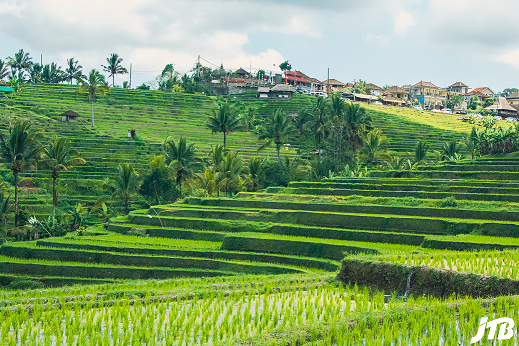
Green rice terraces show the agricultural landscape that makes village trekking in Bali so memorable. Image source: Kura-Kura Blog.
Why Choose Bali Village Trekking?
Bali can feel completely different when explored on foot.
From inside a vehicle, rice fields and villages can pass by within seconds. Walking through them gives you time to notice how irrigation water moves between paddies, how farmers care for the land, and how temples, houses, gardens, and agricultural areas exist side by side.
A village trek also creates opportunities for conversations that rarely happen during a quick sightseeing stop.
Your guide can explain local farming methods, daily routines, household traditions, and the relationship between the surrounding landscape and village life.
For travelers interested in nature and culture rather than simply collecting photographs, Bali Village Trekking – Paddy Field, Waterfall, and Balinese Lunch offers a slower and more personal way to discover the island.
1. Begin the Day at the Edge of Rural Bali
The experience starts away from the busiest resort districts, where the scenery gradually becomes greener and more agricultural.
Before beginning the trek, your local guide introduces the route and explains what you can expect during the walk.
This transition is important because the day is not designed as a demanding mountain hike.
Instead, it is a countryside experience where walking becomes the best way to observe details that would otherwise be easy to miss.
The pace gives you time to look around, take photographs, ask questions, and appreciate the difference between Bali’s tourist areas and its rural communities.
2. Walk Between Working Paddy Fields
The rice fields form one of the most important parts of the journey.
These are not simply decorative landscapes created for visitors. They are working agricultural areas where farmers continue cultivating rice as part of everyday village life.
Walking along the narrow paths gives you a much closer view of the fields than stopping at a roadside viewpoint.
You may see recently planted paddies filled with water, bright-green young rice plants, mature crops moving gently in the wind, or farmers carrying out seasonal work.
Because rice cultivation follows agricultural cycles, the appearance of the countryside changes throughout the year.
This constantly changing landscape means two visits to the same village may look surprisingly different.
3. See How Farming Shapes Everyday Village Life
Rice farming is closely connected with the rhythm of rural Bali.
During the trek, your guide can explain traditional farming practices and how villagers continue working with the surrounding land.
Depending on the activities taking place during your visit, you may observe farmers preparing fields, tending crops, managing irrigation, or carrying out other agricultural work.
The current Kura-Kura Bus village experience may also introduce guests to simple hands-on activities connected with rural life, such as rice planting, preparing firewood, or helping around the household.
These activities help turn the experience from passive sightseeing into something more interactive.
4. Look Closely at the Water Around the Rice Fields
One detail worth watching during a paddy-field walk is the water itself.
Irrigation channels run between agricultural plots and help distribute water across the fields.
This network forms an important part of Bali’s traditional agricultural landscape.
Instead of looking only at the wide view, notice the smaller details around you: narrow waterways, field boundaries, shrines, pathways, and the different levels of the paddies.
Understanding how the fields function makes the landscape more interesting than simply seeing it as a beautiful background for photographs.
It becomes easier to recognize that Bali’s countryside is shaped by generations of agricultural knowledge and community cooperation.
5. Discover Daily Life Inside a Balinese Village
The walk is also an opportunity to see a part of Bali that travelers rarely experience from resort areas.
Village houses, gardens, small temples, family compounds, agricultural plots, and pathways all form part of the surrounding environment.
Daily life continues while visitors pass through.
Someone may be preparing food, arranging offerings, caring for plants, working in a field, or carrying out household activities.
These ordinary moments can often tell visitors more about Bali than a carefully staged attraction.
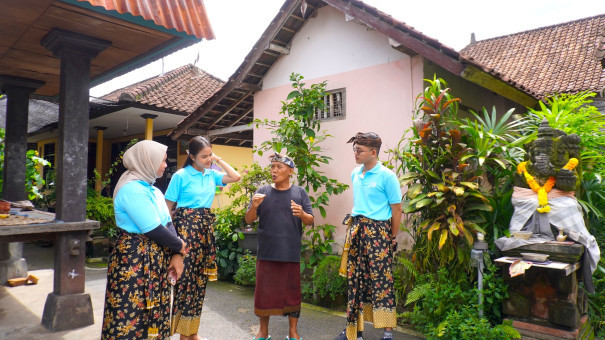
Learning about everyday traditions inside a Balinese village compound. Image source: Kura-Kura Blog.
6. Visit a Balinese Family Environment
A family compound provides another perspective on village life.
Traditional Balinese homes are usually arranged very differently from a single modern house. Different buildings and spaces may serve different purposes within the same family compound.
Gardens, shrines, kitchens, family areas, and ceremonial spaces can exist within one property.
The experience becomes more meaningful when your guide explains how these spaces fit into everyday family life rather than simply showing them as architecture.
The current village trekking program also welcomes guests with local refreshments such as fresh coconut and seasonal fruits, depending on availability.
7. Follow the Trail Toward a Hidden Waterfall
After walking through agricultural scenery, the surroundings gradually become more tropical.
Vegetation grows thicker, the air can feel cooler, and eventually the sound of running water begins to appear through the trees.
The waterfall adds a completely different atmosphere to the trek.
After the open views of the rice fields, the shaded forest surroundings provide a refreshing natural contrast.
It is a place to pause, take photographs, listen to the water, and enjoy one of the quieter landscapes along the route.
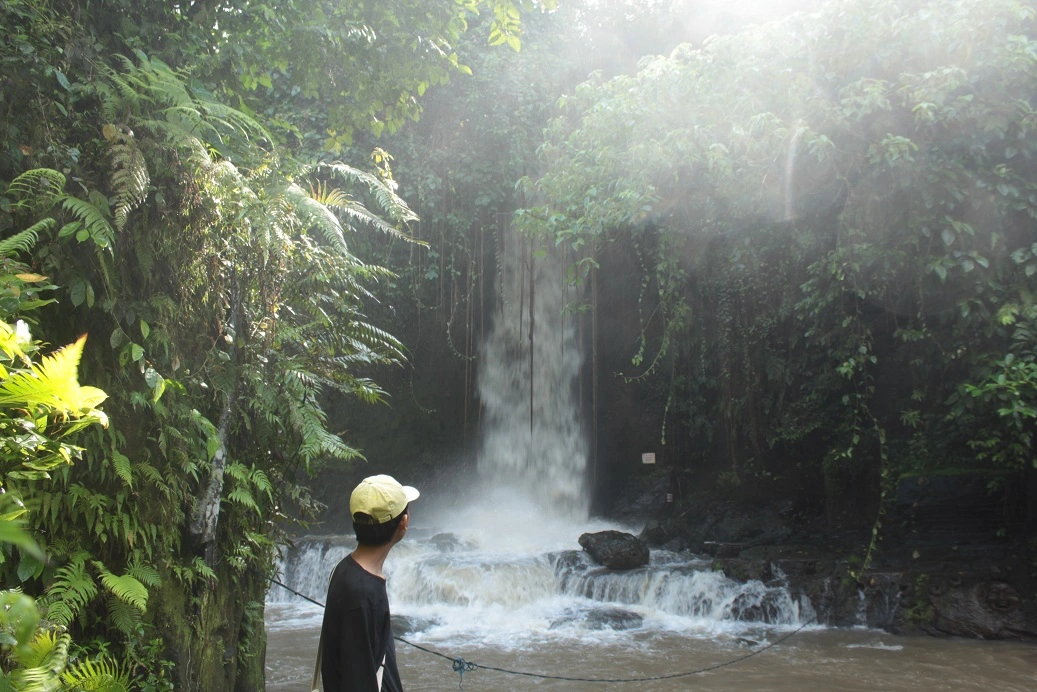
A waterfall surrounded by dense tropical vegetation along the village trekking experience. Image source: Kura-Kura Bus.
What Makes Village Trekking Different from Visiting a Rice Terrace Viewpoint?
Both experiences can be beautiful, but they offer very different perspectives.
- You move through the landscape: instead of viewing the paddies from one location, you walk between agricultural areas and village paths.
- You meet local people: the experience includes interaction with villagers rather than only sightseeing.
- You learn how farming works: your guide can explain what is happening in the fields around you.
- You experience different environments: rice paddies, village compounds, tropical paths, and a waterfall create variety during the walk.
- The pace is slower: there is more time to notice details and ask questions.
- Food becomes part of the experience: the journey finishes with a Balinese meal rather than simply ending at a viewpoint.
For travelers who want more than a quick rice-field photograph, walking through the countryside provides much more context.
8. Finish the Trek with a Balinese Lunch
After several hours outdoors, the experience shifts from walking to eating.
The current program includes lunch at a Balinese house, where guests can enjoy traditional food prepared with local ingredients.
The setting gives the meal a different character from lunch at a conventional restaurant.
Food becomes another way to understand village life and Balinese hospitality.
After walking through the landscape where local ingredients are grown, sitting down for a home-style meal creates a natural conclusion to the experience.
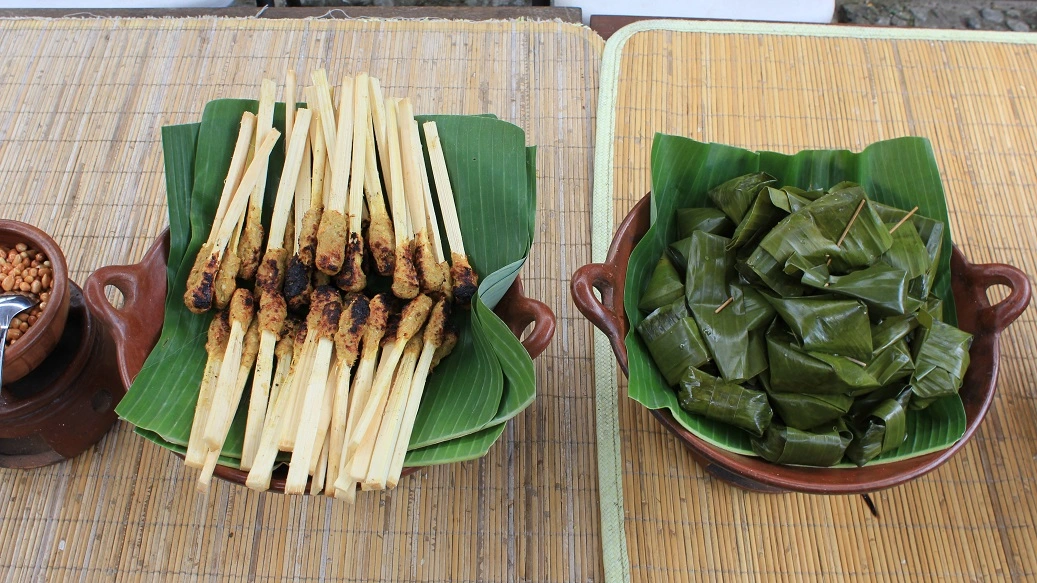
Traditional dishes served as part of a Balinese village experience. Image source: Kura-Kura Bus.
Why the Balinese Lunch Matters to the Experience
Lunch may sound like a simple inclusion, but within a village trek it helps complete the story of the day.
You have already walked beside agricultural land, seen how villagers live, and learned about the countryside.
Eating local food in a village setting connects those experiences with another important part of Balinese daily life.
The current Kura-Kura Bus experience emphasizes home cooking and ingredients sourced from the local environment, including produce from the host’s garden when available.
This creates a stronger connection between the landscape you walked through and the meal you enjoy afterward.
What Does Bali Village Trekking – Paddy Field, Waterfall, and Balinese Lunch Include?
The current Kura-Kura Bus experience lasts approximately six hours. The published schedule follows this general route:
- 07:30 – Hotel pick-up: depart from selected major hotel areas in Bali.
- 08:30 – Meeting point: arrive near Ubud, meet your guide, and receive a short introduction before starting the walk.
- 08:45 – Rice field walk and farm experience: walk through green paddies and learn about local agricultural traditions.
- 10:00 – Waterfall: visit a tropical waterfall and enjoy time surrounded by nature.
- 12:00 – Balinese lunch: enjoy traditional food at a Balinese house.
- 13:15 – Return: begin the transfer back to your hotel.
Timings may vary depending on local conditions, traffic, weather, and the pace of the group.
A Different Way to Experience Slow Travel in Bali
Village trekking is not about covering the greatest distance possible.
The value comes from slowing down enough to observe what is around you.
A farmer crossing a field, water flowing through an irrigation channel, fruit growing beside a family home, or offerings placed near a small shrine may appear ordinary to local residents.
For visitors, however, these details can reveal how daily life works beyond Bali’s tourism districts.
That makes the experience particularly suitable for travelers interested in slow travel: spending more time understanding one place instead of rushing through several attractions.
Who Will Enjoy This Bali Village Trekking Experience?
- Nature lovers: walk through rice paddies, village vegetation, and tropical waterfall scenery.
- Culture-focused travelers: learn about farming, family compounds, food, and everyday Balinese traditions.
- Couples: enjoy a relaxed countryside experience away from crowded attractions.
- Families: introduce younger travelers to agriculture, nature, and village life through an active experience.
- Photographers: discover rice fields, villagers, tropical scenery, traditional homes, and waterfall landscapes.
- Food lovers: finish the walk with a traditional Balinese meal in a local setting.
- Repeat visitors: discover another side of Bali beyond beaches, temples, shopping, and major tourist landmarks.
What Should You Bring for Bali Village Trekking?
The walk is designed as a countryside experience rather than a difficult mountain trek, but practical preparation will make the day more comfortable.
- Comfortable walking shoes: choose footwear suitable for rice-field paths and uneven village surfaces.
- Light clothing: breathable clothes are useful in Bali’s tropical climate.
- Sun protection: bring sunscreen, sunglasses, or a hat for open agricultural areas.
- Water: stay hydrated while walking.
- Small towel: useful after visiting the waterfall.
- Change of clothes: consider bringing one if you expect to get wet.
- Rain protection: a compact poncho or rain jacket can be useful during wetter periods.
- Camera or phone: rice paddies and village scenery provide many natural photo opportunities.
What Happens If the Weather Changes?
Weather is naturally part of any outdoor experience in tropical Bali.
Bright sunshine can create vivid views across the rice fields, while light rain can make vegetation appear even greener.
However, rain may also make rural paths wetter and more slippery.
Comfortable footwear and simple rain protection are therefore useful, especially during Bali’s wetter months.
Travelers should also follow their guide’s advice because local conditions can influence the safest and most comfortable way to complete the trek.
Explore Bali Village Life with Kura-Kura Bus
Kura-Kura Bus offers Bali Village Trekking – Paddy Field, Waterfall, and Balinese Lunch as an approximately six-hour countryside experience.
The journey combines a rice-field walk, farming insights, village interaction, a tropical waterfall, and traditional Balinese food.
The current tour includes land transportation in an air-conditioned non-smoking vehicle, an English-speaking licensed guide, entrance fees, and Balinese traditional lunch.
Because schedules, rates, inclusions, and operating conditions can change, check the official product page for the latest information before booking.
Frequently Asked Questions About Bali Village Trekking
What Is Bali Village Trekking – Paddy Field, Waterfall, and Balinese Lunch?
It is a guided countryside experience combining a walk through rice paddies, village and farming experiences, a waterfall visit, and a traditional Balinese lunch.
How Long Does the Bali Village Trekking Tour Take?
The current Kura-Kura Bus experience takes approximately six hours, including the countryside activities and transportation.
Does the Tour Include Rice Fields?
Yes. Walking through working rice fields and learning about local farming are among the main parts of the experience.
Is There a Waterfall During the Trek?
Yes. The published itinerary includes approximately 30 minutes at a waterfall during the countryside journey.
Is Balinese Lunch Included?
Yes. The tour includes traditional Balinese food served at a Balinese house.
Is This a Difficult Trek?
The experience is designed as countryside walking rather than extreme trekking. Travelers should still be comfortable walking outdoors and across rural paths.
What Should I Wear?
Wear comfortable walking shoes and lightweight clothing. Sun protection and a small rain jacket are also useful depending on the weather.
Can Families Join Bali Village Trekking?
The experience can suit families who are comfortable with walking and outdoor activities. Consider the age and mobility of younger travelers before booking.
Does the Tour Include a Guide?
Yes. The current Kura-Kura Bus package includes an English-speaking licensed guide.
Where Can I Book Bali Village Trekking?
The experience can be booked through the official Kura-Kura Bus website, where the latest availability, price, pick-up details, and cancellation conditions are published.
Walk Beyond Bali’s Tourist Roads
Some parts of Bali are best discovered slowly.
Follow small paths between rice paddies, watch village life continue around you, learn how local families work with the land, and listen as the sound of a hidden waterfall grows louder through tropical vegetation.
Then finish your journey around a table, enjoying Balinese food in the same countryside you have spent the morning exploring.
Bali Village Trekking – Paddy Field, Waterfall, and Balinese Lunch brings nature, culture, village life, and local cuisine together in one relaxed experience.
For travelers who want to see more than Bali’s famous attractions, exploring the island one step at a time can reveal an entirely different side of the destination.
Explore Bali Village Trekking Contact Kura-Kura Bus