
When people imagine Bali, beaches, temples, rice terraces, and tropical resorts usually come to mind first. Yet between the island’s land and sea lies another landscape that many visitors rarely notice: the mangrove forest.
This green coastal environment feels very different from Bali’s busy tourism areas. Narrow waterways pass between dense trees, exposed roots reach into shallow water, and the sounds of roads gradually give way to birds, paddles, and moving water.
A mangrove forest is also much more than a beautiful place to photograph. It forms part of an important coastal ecosystem where plants, water, wildlife, and local communities are closely connected.
If you want to discover a quieter side of Bali while learning more about the island’s natural environment, this guide explains what makes the mangrove forest special, what you may experience there, and several ways to explore it responsibly.
What Exactly Is a Mangrove Forest?
A mangrove forest is a coastal ecosystem formed by trees and shrubs that are able to grow in environments influenced by saltwater and tides.
Instead of growing on dry inland soil, mangroves are commonly found around sheltered shorelines, estuaries, lagoons, and shallow coastal waterways.
One of their most recognizable features is their root system. Depending on the species, roots may appear above the mud or water, creating complex natural structures along the shoreline.
These areas provide habitat for many forms of coastal life while also creating a transition between land and sea.
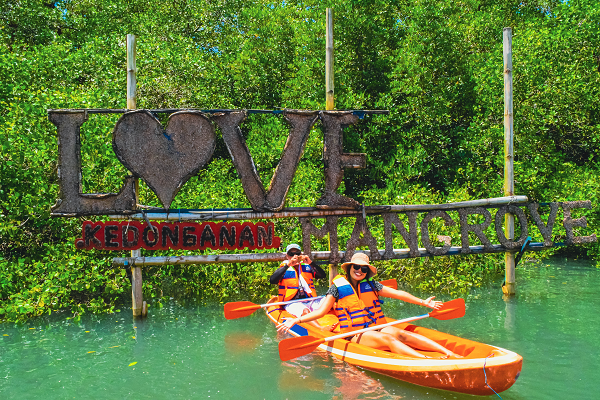 Image source: Kura-Kura Blog / Kura-Kura Bus.
1. Discover a Landscape Between Land and Sea
The atmosphere inside a mangrove forest changes gradually as you enter the waterways.
Open coastal areas become narrower channels surrounded by vegetation. Tree branches create patches of shade, while tangled roots extend toward the water below.
Unlike a conventional forest walk, much of the scenery is best viewed directly from the water. This creates an unusual perspective because you are travelling through the ecosystem rather than simply observing it from a road or viewpoint.
The surroundings can also change according to the tide, weather, and time of day. For that reason, two visits may not look exactly the same.
For travelers who have already explored Bali’s temples and beaches, the landscape provides a completely different visual experience.
2. Understand Why Mangroves Matter to the Coast
Mangroves play an important role in coastal environments.
Their dense root systems help stabilize coastal areas while the surrounding ecosystem creates shelter and habitat for different forms of wildlife.
Fish, birds, crabs, and other small animals may use mangrove environments for feeding, shelter, or breeding depending on local conditions.
For travelers, understanding this function changes the way the forest feels. What initially appears to be a collection of trees growing beside the water becomes a connected ecosystem supporting life both above and below the surface.
This environmental role is one reason the mangrove forest has become an interesting setting for educational and sustainable tourism experiences in Bali.
3. Look Closely at the Mangrove Root System
One of the most interesting features of a mangrove environment is found near the water rather than high in the canopy.
Mangrove roots can form intricate shapes along muddy banks and shallow waterways. Some rise visibly above the surface, while others spread through wet sediment.
These structures create small protected spaces where aquatic life can move, feed, or shelter.
When exploring slowly by canoe, stand up paddleboard, or traditional boat, you have more time to notice details that are easy to miss from a distance.
Reflections, roots, leaves, shallow water, and patches of sunlight combine to make the mangrove forest particularly interesting for travelers who enjoy nature photography.
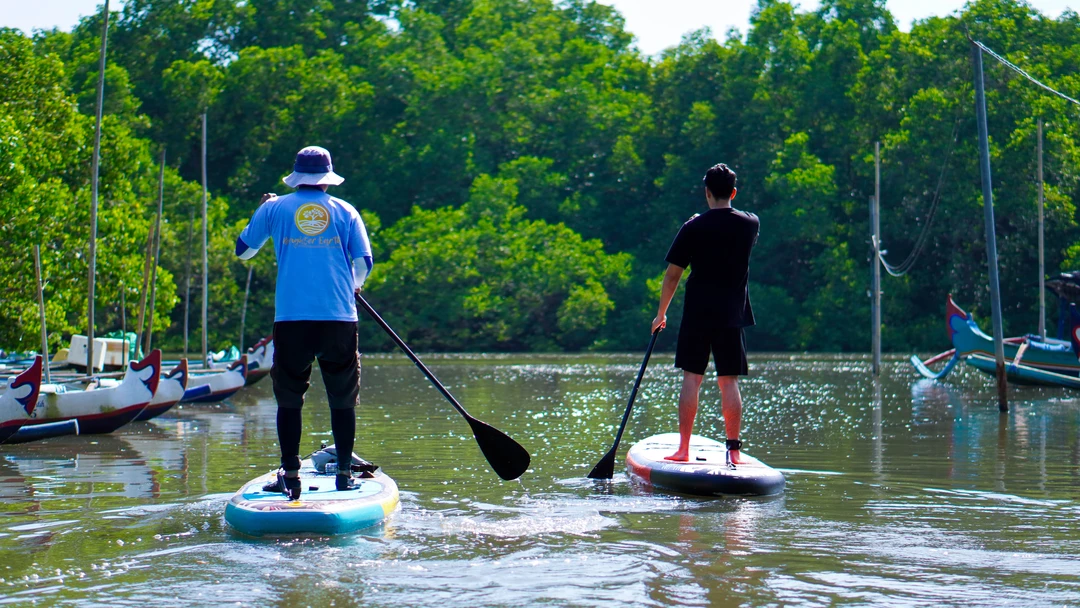
Image source: Kura-Kura Blog / Kura-Kura Bus.
4. Watch for Wildlife Along the Water
A mangrove environment can support birds, fish, crabs, insects, and other coastal wildlife.
However, visiting a mangrove forest should not be treated like visiting a zoo. Wildlife moves naturally, and sightings depend on the tide, weather, season, noise levels, and conditions on the day.
That uncertainty is part of the experience.
A bird may appear between the branches, small fish may move beneath the canoe, or a crab may disappear between exposed roots before you can take a photograph.
Traveling quietly helps you pay more attention to these smaller details.
Instead of arriving expecting a specific animal encounter, consider wildlife an additional part of discovering the ecosystem naturally.
5. Explore the Mangrove Forest Without a Motor
One of the most enjoyable ways to experience the forest is by canoe.
Without the constant sound of an engine, visitors can move slowly through the waterways and concentrate more easily on the surrounding landscape.
The Kura-Kura Bus mangrove canoe experience is designed to be beginner-friendly. Before entering the water, participants receive basic paddling and safety instructions, while life jackets are provided during the activity.
The canoe portion takes approximately one to one and a half hours, although the route and timing may change according to tide and weather conditions.
Moving under your own power also makes the journey feel more connected to the environment. Instead of simply passing through the scenery, every paddle stroke becomes part of the experience.
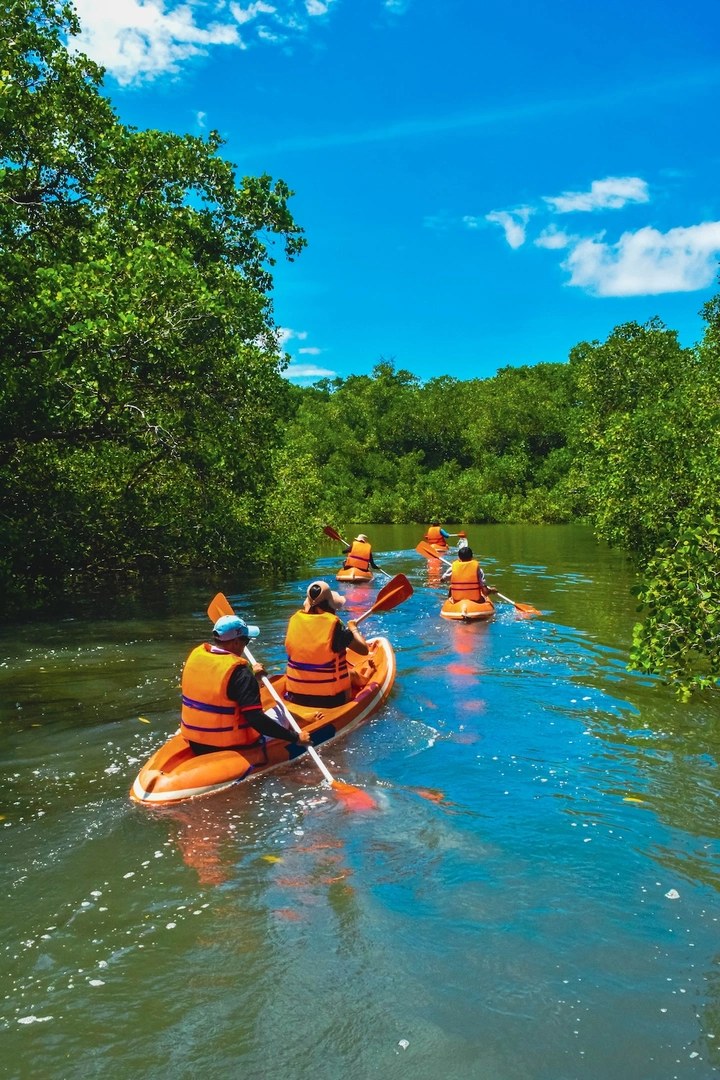
Image source: Kura-Kura Bus.
6. Try Stand Up Paddle for a Different View
Canoeing is not the only way to move through Bali’s mangrove waterways.
Stand up paddleboarding offers a higher viewing position and a slightly more active experience.
From the board, you can look across the water toward the trees while still travelling at a relatively slow pace.
For beginners, balancing may feel unfamiliar at first. However, calm waterways can make this type of activity more approachable than paddling in open sea conditions.
You also do not necessarily need to stand continuously. The experience is about discovering the surroundings comfortably rather than racing through the forest.
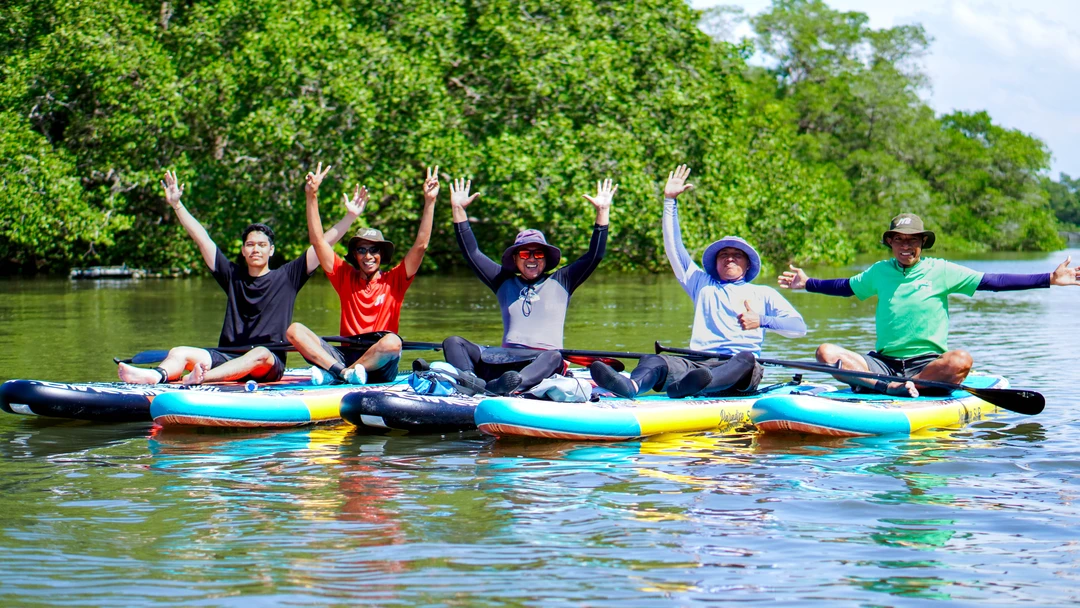
Image source: Kura-Kura Blog / Kura-Kura Bus.
7. Choose a Traditional Boat for a More Relaxed Journey
Not everyone wants to paddle during their holiday.
For travelers who prefer a more relaxed way to see the surroundings, exploring by traditional Balinese jukung can provide another perspective.
The boat allows you to sit back and observe the forest while moving through quiet waterways.
This style of experience can work particularly well for couples, families, photographers, or travelers who are more interested in scenery than physical activity.
It also adds a local cultural element to the journey because the jukung is closely associated with Bali’s coastal communities.
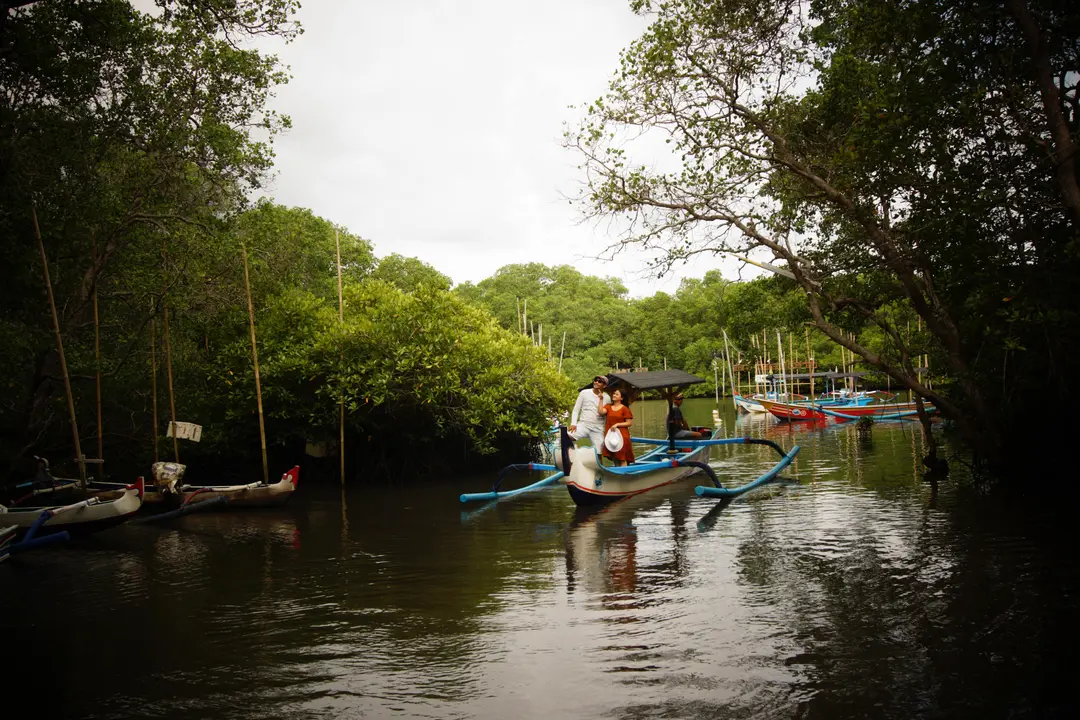
Image source: Kura-Kura Blog / Kura-Kura Bus.
8. Notice How the Forest Changes With the Tide
A mangrove forest is closely connected with tidal movement.
Water levels can affect how certain channels look and which routes are suitable for activities at a particular time.
This is why mangrove tours may operate according to natural conditions rather than following exactly the same schedule every day.
Tide and weather can influence departure times, water depth, route selection, and overall conditions inside the waterways.
Rather than considering this an inconvenience, it helps to remember that you are visiting a natural ecosystem.
The environment sets part of the schedule.
9. Combine Coastal Nature With a Sea Experience
Travelers who want more variety can combine a mangrove visit with another marine activity.
One option is to explore tropical waters before moving into the quieter mangrove environment.
The change in atmosphere can be surprisingly noticeable. Open water feels bright and expansive, while the mangrove channels become sheltered, green, and calm.
This contrast makes a combined marine and mangrove experience useful for visitors who want both recreation and nature discovery during the same outing.
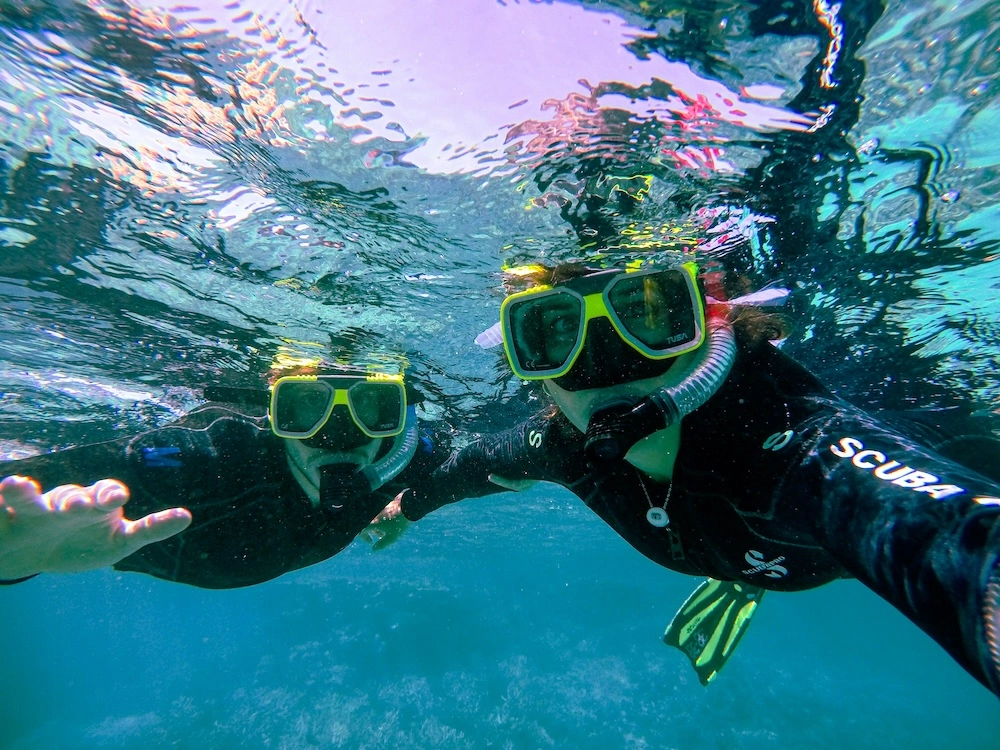
Image source: Kura-Kura Blog / Kura-Kura Bus.
Which Mangrove Forest Experience Matches Your Travel Style?
- Nature lovers: choose a slow canoe journey where you can observe trees, roots, waterways, and wildlife carefully.
- Active travelers: try stand up paddle for a more physical way to move through the mangroves.
- Families: consider a guided beginner-friendly activity with appropriate safety equipment and age requirements.
- Couples: a quiet canoe or traditional jukung ride provides more time to enjoy the scenery together.
- Photographers: look for calm water, reflections, exposed roots, boats, and changing natural light.
- Marine activity lovers: combine snorkeling or another coastal activity with a mangrove cruise.
- Sustainable travelers: choose experiences that include local guides and information about the ecosystem and conservation.
What Does a Mangrove Forest Experience Feel Like?
The experience is generally slower than many of Bali’s major adventure activities.
There are no dramatic mountain climbs or high-speed rides. Instead, the attraction comes from paying attention to what surrounds you.
You notice the sound of a paddle entering the water, the different shapes of mangrove roots, birds moving above the trees, reflections beneath the canoe, and small changes in the width of each channel.
This makes the activity particularly suitable for travelers who want something outdoors without filling the day with intense physical activity.
The mangrove forest encourages a different kind of sightseeing: slower, quieter, and more observant.
Mangrove Forest Etiquette: How to Visit Responsibly
Because mangrove areas are living ecosystems rather than constructed attractions, small actions can make a difference.
- Follow your guide: stay on the recommended route and respect local safety instructions.
- Avoid disturbing wildlife: observe animals quietly instead of chasing or touching them.
- Do not damage roots or branches: mangrove structures are part of the functioning ecosystem.
- Keep rubbish with you: never leave plastic, bottles, food packaging, or other waste in the forest.
- Use reusable items when possible: a refillable drinking bottle and reusable dry bag can reduce disposable waste.
- Respect local communities: some mangrove experiences operate in cooperation with fishermen and community groups.
- Accept natural conditions: tides and weather may require changes to the planned route or timing.
What Should You Bring?
You do not need complicated equipment for most guided mangrove experiences, but a few practical items can make the activity more comfortable.
- Quick-drying clothing: small splashes are possible during canoeing or paddleboarding.
- Sun protection: bring sunscreen, sunglasses, and a hat.
- Waterproof phone pouch: useful if you plan to take photos from the water.
- Towel: convenient after a paddling activity.
- Change of clothes: useful if you prefer to remain dry for the rest of the day.
- Comfortable footwear: choose shoes or sandals suitable for a coastal environment.
- Drinking water: staying hydrated is important in Bali’s warm climate.
Is a Mangrove Forest Suitable for Families?
A guided mangrove activity can be an interesting option for families because it combines outdoor activity with simple environmental learning.
Instead of children only seeing scenery from a vehicle, they can observe water, plants, roots, birds, and other natural features from much closer range.
However, families should always check the minimum age and safety requirements of the specific activity before booking.
For the Kura-Kura Bus mangrove canoe experience, participants must be at least five years old, while children must be accompanied by a parent or guardian.
Life jackets are provided during the activity, and participants should follow the guide’s instructions throughout the tour.
Frequently Asked Questions About Mangrove Forests in Bali
What is a mangrove forest?
A mangrove forest is a coastal ecosystem where mangrove trees and shrubs grow in areas influenced by tides and saltwater. Their root systems create important habitat and help support the surrounding coastal environment.
Where can I experience a mangrove forest in Bali?
Mangrove environments can be found around parts of Bali’s coastline. Kura-Kura Bus offers guided mangrove experiences around the Kedonganan and Jimbaran area in South Bali.
What can I see inside a mangrove forest?
You can observe mangrove trees, exposed root systems, narrow waterways, traditional boats, and potentially birds, fish, crabs, and other wildlife. Specific wildlife sightings cannot be guaranteed.
Can beginners go canoeing in the mangrove forest?
Yes. The Kura-Kura Bus mangrove canoe experience is beginner-friendly and does not require previous canoeing experience. Participants receive basic paddling and safety instructions before entering the water.
How long does mangrove canoeing take?
The canoe activity generally lasts approximately one to one and a half hours. Total tour duration can be longer when hotel transportation is included.
Will I get wet?
You may get slightly wet from paddle splashes, so quick-drying clothes and a towel are useful.
Do mangrove tours depend on tides?
Yes. Water levels and local conditions can influence the timing, route, and operation of mangrove activities.
What happens when it rains?
An activity may continue during light rain when conditions remain safe. However, guides or operators may adjust, postpone, or cancel the activity when weather or water conditions are unsuitable.
Are children allowed to join?
Age requirements vary by experience. For the Kura-Kura Bus mangrove canoe tour, children from five years old can participate when accompanied by a parent or guardian.
Do I need to know how to swim?
Life jackets are provided for the canoe experience. Travelers who have concerns about swimming ability should contact the operator before booking so the activity can be discussed in advance.
Is mangrove forest tourism environmentally friendly?
It can support environmental awareness when activities are operated responsibly. Travelers should follow designated routes, avoid disturbing wildlife, prevent littering, and respect local conservation practices.
Can I combine a mangrove visit with other activities?
Yes. Depending on the tour, mangrove exploration can be combined with snorkeling, marine activities, stand up paddle, or other South Bali experiences.
See Another Side of Bali Inside the Mangrove Forest
Bali’s beaches may receive most of the attention, but the island’s coastline has quieter stories to tell.
Inside a mangrove forest, the experience becomes less about ticking off another attraction and more about noticing the relationship between water, plants, wildlife, and coastal communities.
You can paddle gently through narrow waterways, stand above the water on a paddleboard, relax aboard a traditional boat, or combine your visit with another marine activity.
Whichever experience you choose, allow the environment to set the pace.
Travel slowly, observe carefully, and enjoy a greener side of Bali that can feel surprisingly removed from the busy resort areas nearby.
Explore Mangrove Canoeing Contact Kura-Kura Bus