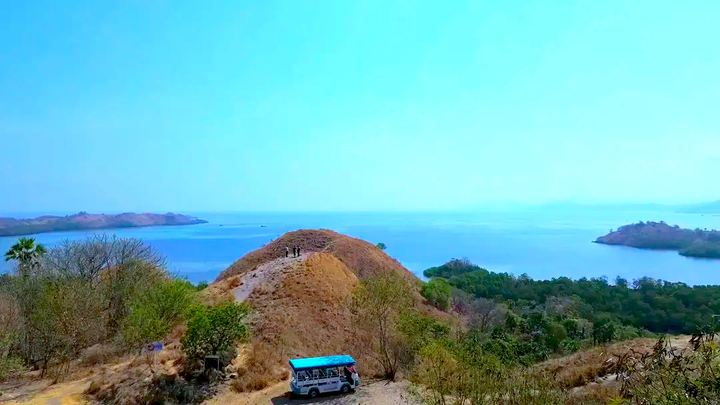
Komodo National Park often appears in travel photographs as an almost unreal combination of dry hills, clear water, pale sand, and one of the world’s most distinctive animals. What those photographs do not show is the coordination required to experience several islands responsibly—especially when the journey begins and ends in Bali on the same day.
The FT01A3 private expedition is designed around that challenge. It connects a Bali hotel with Ngurah Rai International Airport, a flight to Labuan Bajo, transfers to the harbour, a private speedboat programme through Komodo National Park, and the return journey to Bali. Its planned highlights are ranger-led visits on Komodo and Rinca islands plus time at Pink Beach.
This guide explains what the day is really like, how the transport pieces fit together, what each stop contributes, and why flight schedules, wildlife, weather, and sea conditions must be treated as variables rather than promises. It is intended for travellers considering a concentrated Komodo experience without adding an overnight stay in Labuan Bajo.
The experience at a glance
| Journey style | Private speedboat day experience from Labuan Bajo, with optional same-day flight coordination from Bali |
|---|---|
| Planned highlights | Komodo Island, Pink Beach, and Rinca Island |
| Wildlife | Ranger-led walks to look for Komodo dragons; sightings can never be guaranteed |
| Water activity | Swimming or snorkeling at Pink Beach, subject to sea and weather conditions |
| Meals and equipment | Packed lunch, mineral water, fruit, and snorkeling equipment are included in the quoted programme |
| Important constraint | A Bali return in one day depends on suitable flights, transfer timing, park access, and safe operating conditions |
This is not a conventional Bali day tour. It crosses islands, time-sensitive transport systems, protected-park procedures, and open water. The value of a coordinated private arrangement is that the flights, airport transfers, harbour movement, boat, local guide, ranger activities, meals, and return logistics are planned as one connected journey.
Private does not mean unrestricted. The boat still operates within harbour, marine, park, and weather requirements. Visitors still follow ranger instructions and the rules of each site. The itinerary may be adapted on the day if safety or operations require it.
Can you really visit Komodo from Bali in one day?
It can be possible when suitable flights and a workable boat window are available. Bali uses the airport code DPS; Labuan Bajo uses LBJ. The outbound flight must arrive early enough for the airport welcome, harbour transfer, boat boarding, island route, and safe return to Labuan Bajo. The return flight must depart late enough to allow a conservative buffer after the boat programme.
That is why the journey cannot be confirmed from a sightseeing wish list alone. The organiser needs the proposed travel date, number of travellers, Bali hotel, and acceptable flight options. Live flight seats, boat capacity, park access, daylight, sea state, and transfer time all influence whether the programme is feasible.
Travellers should also consider the intensity. Hotel pickup may be several hours before the first flight, and the Bali hotel return can be late. The day includes airports, boat travel, heat, walking, and repeated transfers. For travellers who prefer a slower pace, have limited mobility, or want more flexibility if conditions change, staying in Labuan Bajo before or after the boat day may be the better design.
How the day is planned
| Stage | What happens | What to check |
|---|---|---|
| Bali departure | Hotel pickup and transfer to DPS approximately 3–4 hours before the scheduled flight | Pickup zone, flight baggage rules, and departure terminal |
| DPS to LBJ | Flight to Labuan Bajo, airport welcome, harbour transfer, and private speedboat boarding | Arrival time leaves a safe operating window |
| Komodo Island | Guided walk with a local ranger through dry tropical habitat | Park rules, walking conditions, heat, and wildlife distance |
| Pink Beach | Time for the shoreline, swimming, snorkeling, or rest | Current, waves, visibility, and guide instructions |
| Rinca Island | A second ranger-led opportunity to learn about Komodo dragons and their habitat | Landing access and the day’s operational sequence |
| Return | Speedboat to Labuan Bajo, airport transfer, LBJ–DPS flight, and Bali hotel drop-off | Conservative connection buffer and final flight schedule |
The exact clock times should be added only after flights and operating arrangements are confirmed. A responsible itinerary uses buffers rather than assuming that every transfer will take the minimum possible time.
Airport congestion, baggage delivery, traffic, harbour procedures, sea conditions, and park access can all change the day. If a delay threatens the return flight or safe boat operation, the local team may need to shorten, reorder, or replace part of the route.
Komodo Island: meeting a living predator
Komodo dragons are the largest living lizards. They are wild predators, not staged attractions, and their behaviour cannot be scheduled. A visit normally includes a ranger-led walk through dry tropical terrain to look for dragons and learn about the island environment.
Sightings are never guaranteed. Temperature, season, animal movement, food availability, nesting behaviour, and visitor access can all affect what is seen. A good encounter is not measured by how close a traveller can get. It is measured by whether the animal remains undisturbed and the group follows the ranger’s direction.
Keep the group together. Do not walk ahead, approach a dragon, crouch close for a photograph, feed wildlife, or create noise to provoke movement. Rangers understand the site and current conditions; their instruction takes priority over a photograph or an expected route.
Wear closed, secure footwear with useful grip. Light clothing, sun protection, and drinking water are important because the landscape can be exposed and hot. Tell the organiser before booking about mobility limitations, medical conditions, pregnancy, or anything that could affect walking in heat or boarding a boat.
Pink Beach: more than a photograph
Pink Beach is known for the colour created by pale sand mixed with red fragments associated with the surrounding marine environment. Colour can appear different with sunlight, tide, wet sand, camera settings, and viewing angle. The beach should be appreciated as part of a living coastal system rather than treated as a removable souvenir.
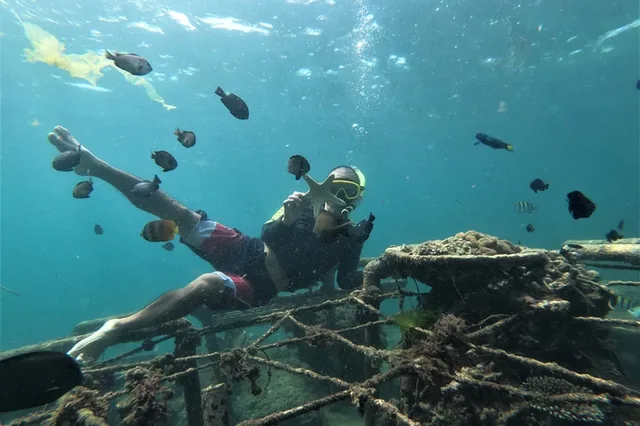
Depending on conditions, the stop may allow swimming, snorkeling, photography, or rest. Snorkeling equipment and related fees are included in the supplied programme, but entering the water is always conditional. Currents, wind, waves, visibility, vessel traffic, individual swimming ability, and guide assessment matter more than the planned activity.
Tell the guide honestly if you are not a confident swimmer. Use the safety equipment provided, stay within the designated area, and do not stand on or touch coral. Avoid chasing animals or collecting sand, shells, coral, or other natural material.
Reef-safe behaviour also begins before entering the water. Secure loose items, reduce disposable packaging, and use sun protection thoughtfully. The aim is to leave the shoreline and marine habitat as they were found.
Rinca Island: a second landscape and another chance to learn
Rinca adds a second ranger-led island context to the journey. Even when the same species is the focus, landscape, access, vegetation, visitor facilities, and animal activity may differ from Komodo Island.
The visit should not be framed as a guarantee of a second dramatic sighting. It is another opportunity to understand habitat, conservation, and coexistence in the national park. Ask the ranger about seasonal behaviour, prey, nesting, patrols, visitor management, and how the island community relates to the protected area.
Follow the same precautions used on Komodo Island. Keep food secured, remain with the ranger, supervise children closely, and do not assume a dragon resting near infrastructure is tame. Wildlife that appears still can move quickly.
What is included in the proposed programme?
The supplied FT01A3 proposal includes air-conditioned transfers in Labuan Bajo, a private speedboat, a local guide, applicable entrance and ranger fees, camera fee, snorkeling equipment and snorkeling-related fees, government tax, mineral water, fruit, and a packed lunch.
Bali hotel-to-airport and airport-to-hotel transfers are included only when stated in the final price summary. Return flights between Bali and Labuan Bajo are also included only when specifically quoted. Never assume a component is included because it appears in the sample journey sequence; the final quotation is the controlling document.
Tips, gratuities, personal expenses, travel insurance, and services not expressly listed are excluded. Dietary requirements and allergies should be provided before confirmation so the operator can advise what can be accommodated in the packed lunch.
Flights are part of the experience—not an afterthought
A same-day expedition depends on flight reliability. Airline schedules, fares, baggage allowances, and seat availability may change until tickets are issued. Issued airline tickets may be non-refundable even when the boat programme has different weather-related remedies.
Do not book separate flights solely from an online map or an optimistic connection calculation. The organiser should review arrival and departure times against harbour transfers, boarding procedures, boat duration, and the operational cutoff required for a safe return.
Pack essential medicine, travel documents, and a change of lightweight clothing in cabin baggage that complies with the airline’s rules. Keep electronic and paper access to the booking details. If you are travelling internationally soon after the excursion, avoid building an unprotected connection that leaves no recovery time.
Weather and sea conditions
Komodo’s conditions can differ from Bali’s. A clear morning in one place does not guarantee calm water throughout the route. Wind, swell, current, visibility, rain, and harbour restrictions can affect departure, route order, snorkeling, beach access, or the entire operation.
The proposal states that if the speedboat tour is cancelled because of adverse weather or unsafe sea conditions, guests may reschedule subject to availability or receive a full refund of the tour programme price. This does not automatically apply to airline tickets already issued. The exact terms in the final quotation should be reviewed before payment.
Weather flexibility is a safety feature, not a service failure. A captain or local operator who changes the programme because conditions are unsafe is making the correct decision.
Who is this journey best suited to?
The expedition suits travellers who have limited time, are comfortable with an early and long day, and want the convenience of one organiser coordinating the route. A private speedboat can also be valuable for families or small groups who want a more contained group format, subject to boat capacity and safety requirements.
It may be less suitable for anyone who dislikes speedboat motion, needs a highly predictable schedule, cannot manage repeated boarding and walking, or would feel disappointed if wildlife or snorkeling conditions differ from photographs. Travellers prone to motion sickness should seek appropriate medical advice before travel and tell the team about their concern.
Children require close adult supervision around wildlife, docks, boats, and water. Ask about current age guidance, life-jacket sizing, walking suitability, and the specific vessel before confirming a family booking.
What to bring
Bring a valid ID or passport required for the flights, booking confirmations, any necessary medication, sun protection, a hat that can be secured, lightweight clothing, a modest change of clothes, a small towel, swimwear, and closed walking shoes. A dry bag or water-resistant pouch is useful for documents and electronics.
Carry only what you can manage through airports, transfers, and boat boarding. Large luggage is not practical for a one-day route. Confirm airline cabin-baggage limits and whether any equipment must be declared.
Reusable water capacity is helpful where operationally permitted, but use the drinking water supplied and avoid dehydration. Pack out personal waste and do not leave anything at the beach or island sites.
Responsible behaviour in Komodo National Park
Protected areas are not theme parks. Stay on permitted routes, listen to rangers and crew, keep wildlife distance, avoid feeding any animal, and do not remove natural material. Drones may be restricted or require permission; do not fly one without confirming the current rules.
Photography should never block a path, separate the group, or pressure another person into an unsafe position. Avoid geotagging sensitive wildlife locations when local guidance advises against it.
Respect local staff as professionals. Rangers, guides, captains, crew, drivers, and airport representatives each manage a different part of the journey. Clear communication and punctuality help protect the limited operating window.
Booking and payment questions to ask
Before payment, request a written quotation that identifies the travel date, group size, tour selling price, flights, Bali transfers, inclusions, exclusions, payment schedule, cancellation rules, amendment conditions, and quotation validity.
The supplied proposal uses a 50% deposit upon booking confirmation, with the balance due no later than 30 days before departure. It also states that no service, boat capacity, or flight seat is held before the required payment and availability reconfirmation. Your final document may differ, so read the version issued specifically for your booking.
Ask how payment fees are calculated, which currency is used, and whether exchange-rate changes affect the amount. If travel insurance is required or recommended, confirm what it should cover, including medical care, trip disruption, weather, missed connections, and marine activities.
A practical booking checklist
Provide your preferred date and at least one alternative, full group size, adult and child ages, Bali hotel, passport names for flights, mobility or medical considerations, dietary requirements, swimming confidence, and any fixed onward travel.
Then confirm the proposed DPS–LBJ and LBJ–DPS flights, baggage allowance, Bali pickup time, Labuan Bajo meeting process, emergency contact, vessel type, life jackets, park fees, lunch, snorkeling equipment, cancellation policy, and weather procedure.
Do not rely on a screenshot of an early proposal after details change. Keep the final quotation, payment receipts, issued tickets, and the latest operational contact together and accessible offline.
Frequently asked questions
Is a Komodo dragon sighting guaranteed?
No. The walks take place in natural habitat, and wildlife movement cannot be guaranteed. Rangers choose routes and manage visitor safety according to current conditions.
Is Pink Beach always bright pink?
Its appearance varies with light, tide, moisture, and natural material. Edited images can create unrealistic expectations.
Can a non-swimmer join?
The overall journey may still be possible, but the traveller should tell the organiser in advance and follow the guide’s advice at water stops. Never enter the water merely because snorkeling appears in the itinerary.
Are Bali–Labuan Bajo flights automatically included?
No. They are included only when explicitly stated and priced in the final quotation.
What happens if the sea is unsafe?
The route can be changed, shortened, rescheduled, or cancelled. The supplied proposal describes a reschedule or refund of the tour programme price for a weather-related speedboat cancellation, but not a refund of issued airline tickets. Check the final terms.
Is one day better than staying overnight?
It depends on your time, energy, risk tolerance, and flight availability. One day is efficient but tightly coordinated. An overnight stay provides more margin and allows Labuan Bajo to become part of the experience.
The best journey is the one designed around real conditions
A private Bali-to-Komodo expedition can compress an extraordinary range of landscapes into one day: an early airport departure, Flores from the air, a harbour transition, open water, ranger-led wildlife walks, and the colour of Pink Beach.
Its success depends less on racing through a checklist than on good coordination and realistic expectations. Flights must support the boat window. The captain and ranger must be free to respond to actual conditions. Travellers must understand that wildlife, water, and weather cannot be scripted.
When those principles shape the plan, the day becomes more than a rapid collection of famous stops. It becomes a carefully connected introduction to one of Indonesia’s most remarkable protected landscapes.