
A Kintamani Lake and Volcano Tour takes you away from Bali’s coastal resorts and into a landscape shaped by mountains, volcanic valleys, rice terraces, traditional villages, and cooler highland air.
The journey changes gradually as you travel inland. Busy streets become greener countryside, temperatures become more comfortable, and eventually the enormous volcanic landscape around Mount Batur and Lake Batur opens in front of you.
However, Kintamani is much more than one mountain viewpoint. The surrounding route can connect rice terraces, sacred water temples, local villages, scenic roads, and some of Bali’s most recognizable highland scenery within a single day.
This guide explains what makes a Kintamani Lake and Volcano Tour worth considering, what you can expect along the route, how Mount Batur and Lake Batur fit into the experience, and how to prepare for a comfortable day in Bali’s highlands.
Why Does Kintamani lake and volcano Feel So Different from South Bali?
Many Bali holidays begin around Kuta, Legian, Jimbaran, Sanur, Nusa Dua, or other coastal areas. Kintamani feels different almost immediately because the landscape, temperature, and pace change as you travel toward the island’s interior.
Instead of beaches and resort streets, the scenery gradually shifts toward rice fields, villages, tropical vegetation, mountain roads, and elevated viewpoints.
The centerpiece is the Batur volcanic landscape. Mount Batur rises inside a much larger caldera, while Lake Batur stretches across the lower part of the highland basin.
Seen together, the volcano and lake create one of Bali’s most distinctive inland panoramas. This contrast is exactly what makes a Kintamani Lake and Volcano Tour particularly appealing when you want to see a side of Bali beyond beaches and sunset destinations.
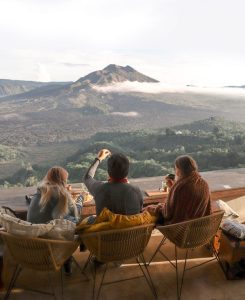
Image source: Kura-Kura Blog – Kintamani Highland.
1. The Journey into Bali’s Highlands Is Part of the Experience
A Kintamani day does not begin only when Mount Batur appears.
The drive inland is part of what makes the route interesting. As you leave Bali’s busier tourism areas, buildings gradually become less dominant and the surroundings become greener.
Rice fields, village roads, family compounds, temples, agricultural land, and tropical vegetation begin to appear more frequently along the way.
The higher you travel, the more noticeable the change becomes. Kintamani sits at a higher elevation than Bali’s southern tourism areas, so the air can feel cooler and the landscape considerably more open.
Rather than viewing transportation simply as the time between attractions, a well-planned highland route allows the changing scenery to become part of the sightseeing itself.
2. Tegalalang Introduces Bali’s Agricultural Landscape
Before reaching the volcanic highlands, a route through central Bali can introduce another landscape strongly associated with the island: terraced rice fields.
Tegalalang is known for agricultural terraces arranged along the contours of the hillside. The layers of green create a completely different scene from both the beaches of southern Bali and the volcanic terrain waiting farther north.
Including a rice-terrace stop gives the day a useful progression.
You begin with cultivated tropical scenery, continue toward Bali’s spiritual and cultural areas, and eventually arrive at the much larger natural landscape of Kintamani.
That variety is one reason the journey works well as a full sightseeing day rather than simply driving directly to one volcano viewpoint and returning.
3. Tirta Empul Adds a Spiritual Side to the Route
The transition from rice terraces to Kintamani can also include one of Bali’s important water temples.
Tirta Empul in Tampaksiring is known for its sacred spring water and purification pools used in Balinese Hindu ritual practice.
A visit here changes the rhythm of the day. Instead of looking only at natural scenery, you have an opportunity to observe temple architecture, religious traditions, courtyards, shrines, and the relationship between water and Balinese spiritual life.
Visitors should remember that Tirta Empul remains an active religious site rather than simply a sightseeing attraction.
Respectful clothing and behavior are therefore important throughout the temple complex.
Combining a cultural stop with the later volcano landscape also gives a Kintamani Lake and Volcano Tour more variety than a purely scenic mountain drive.
4. Mount Batur Becomes the Visual Center of the Day
Eventually the road reaches Kintamani, where Mount Batur becomes the defining feature of the landscape.
The mountain rises from the Batur caldera, surrounded by terrain formed through a long history of volcanic activity.
From elevated viewpoints around Kintamani, you can observe the volcano within a much wider landscape rather than seeing it as an isolated mountain.
Dark volcanic areas, green slopes, villages, farmland, distant ridges, and Lake Batur all contribute to the panorama.
This is also what separates a sightseeing-based Kintamani Lake and Volcano Tour from a Mount Batur sunrise hike.
You do not need to climb the volcano to appreciate its scale. A highland sightseeing route allows travelers to experience the landscape from comfortable viewpoints while continuing to other cultural destinations during the same day.
5. Lake Batur Completes the Volcanic Landscape
Mount Batur may attract the first attention, but Lake Batur is equally important to the character of Kintamani.
The lake sits within the volcanic basin below the surrounding highlands, adding a calm blue element to an otherwise dramatic mountain landscape.
From higher viewpoints, the relationship between the volcano, lake, villages, and surrounding caldera becomes much easier to understand.
Clouds frequently move across the mountains during the day, meaning the view can change considerably within a short period.
One moment the volcano may appear completely clear. Later, cloud can wrap around part of the peak while the lake remains visible below.
Rather than expecting exactly the same photograph you have seen online, it is better to treat the changing mountain conditions as part of the highland experience.
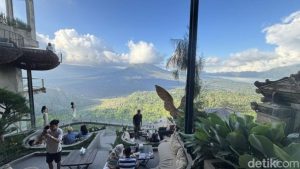
Image source: Kura-Kura Blog – Kintamani Highland.
6. A Highland Coffee Break Can Be Part of the Destination
Coffee stops feel different in Kintamani because the scenery becomes part of the experience.
Instead of treating coffee simply as a short refreshment break, many travelers enjoy sitting for a while with views overlooking Mount Batur, Lake Batur, or the surrounding highlands.
The cooler temperature also makes this slower part of the journey particularly comfortable.
Kintamani is associated with coffee-growing areas, so a stop can also provide a natural connection between the volcanic landscape and local agriculture.
Volcanic soil, highland elevation, farming traditions, and the region’s climate all contribute to Kintamani’s agricultural identity.
Even when your itinerary does not include a full plantation visit, taking time to enjoy the mountain atmosphere can prevent the day from feeling like a race between sightseeing stops.
7. Penglipuran Brings the Journey Back to Balinese Village Life
After the enormous scale of Kintamani, Penglipuran offers a completely different type of experience.
The village is known for its traditional layout, characteristic entrances, Balinese architecture, and community environment.
Walking through the village creates a more human-scale conclusion to a day that has already included rice terraces, temple traditions, mountains, and volcanic scenery.
Rather than simply photographing another landscape, you can observe details in gates, courtyards, building styles, gardens, and the arrangement of the village itself.
This contrast is useful.
Mount Batur demonstrates the natural forces that shaped Bali, while a village such as Penglipuran shows how people, architecture, and tradition form another layer of the island’s identity.
8. A Volkswagen Safari Changes How the Journey Feels
The vehicle can also become part of the experience rather than disappearing into the background.
Kura-Kura Bus currently operates a Kintamani route using a classic Volkswagen Safari, creating a more open countryside-road atmosphere than an ordinary sightseeing vehicle.
This style works particularly well on a route where scenery changes throughout the day.
Rice fields, village entrances, tropical vegetation, traditional architecture, and mountain roads all become part of the visual experience while travelling between stops.
For photography, the Volkswagen can also become part of the story rather than simply transportation parked outside each attraction.
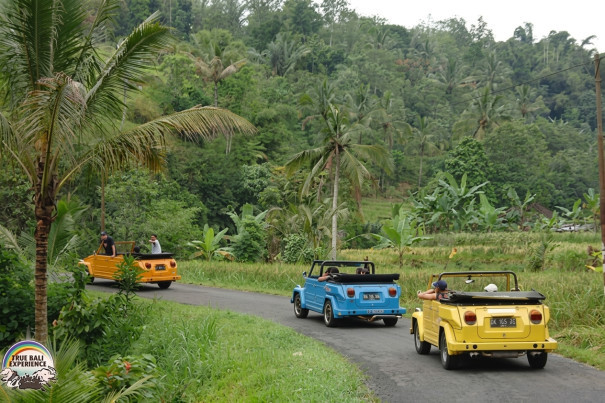
Image source: Kura-Kura Blog – Safari by Volkswagen: Bali’s Countryside Open-Air Adventure.
Who Will Enjoy a Kintamani Lake and Volcano Tour?
- First-time Bali visitors: the route combines several different sides of Bali within one sightseeing day.
- Nature lovers: Mount Batur, Lake Batur, rice terraces, tropical countryside, and mountain scenery provide strong natural variety.
- Couples: highland views, scenic roads, village surroundings, and a relaxed coffee stop can create an enjoyable day away from the busier resort areas.
- Families: the route provides sightseeing without requiring the physical effort of climbing Mount Batur.
- Photography lovers: rice terraces, temples, volcano views, villages, and a classic Volkswagen create very different photographic settings.
- Culture travelers: Tirta Empul and Penglipuran introduce religious traditions, architecture, and village life alongside the natural scenery.
- Repeat Bali visitors: Kintamani offers a noticeable change from beach areas, Uluwatu, Seminyak, or other familiar southern routes.
- Travelers who prefer relaxed sightseeing: the volcano can be appreciated from panoramic viewpoints without committing to an early-morning hike.
How to Prepare for a Day in Kintamani
The highlands are easy to enjoy, but a few practical preparations can make the journey more comfortable.
- Bring a light layer: Kintamani is cooler than Bali’s coastal areas, particularly when the weather is cloudy or windy.
- Use sun protection: mountain temperatures may feel mild even when the sun remains strong.
- Wear comfortable footwear: temple grounds, rice terraces, village paths, and viewpoints may involve uneven surfaces.
- Prepare suitable temple clothing: respectful dress is important when visiting sacred sites such as Tirta Empul.
- Charge your phone or camera: the route includes several very different photography locations.
- Carry drinking water: sightseeing can still involve plenty of walking even in cooler weather.
- Keep a flexible mindset: clouds and rain can temporarily affect mountain visibility.
- Travel light: a compact day bag is easier when repeatedly entering and leaving the vehicle.
- Bring personal cash: useful for drinks, snacks, souvenirs, or other expenses not covered by your package.
Kintamani Viewpoint or Mount Batur Sunrise Hike?
Both experiences focus on the same volcanic region, but they are designed for very different travelers.
A Kintamani Lake and Volcano Tour emphasizes sightseeing. You travel through central Bali, visit cultural attractions, reach panoramic viewpoints, and enjoy Mount Batur and Lake Batur without climbing the mountain.
A sunrise hike is much more activity-focused.
It normally requires leaving your accommodation during the night, reaching the mountain before dawn, and hiking toward the summit in time for sunrise.
Choose the sightseeing route when you want volcano scenery combined with rice terraces, temples, villages, and a comfortable full-day journey.
Choose the sunrise hike when reaching Mount Batur on foot is itself the main experience you want from the day.
Neither experience needs to replace the other. They simply show the Kintamani landscape from very different perspectives.
How Much Time Should You Allow for Kintamani lake and volcano tour?
Kintamani itself may look like a single destination on the map, but a complete highland journey requires much more than the time spent at the volcano viewpoint.
The drive from Bali’s southern tourism areas takes time. In addition, a full route can include rice terraces, Tirta Empul, sightseeing stops, lunch, mountain viewpoints, village exploration, and the return journey.
For this reason, Kintamani works best when treated as a substantial day rather than a quick side trip.
A realistic schedule also provides some flexibility if traffic, weather, parking conditions, or sightseeing stops take longer than expected.
Trying to combine Kintamani with too many unrelated attractions in distant parts of Bali can make the journey unnecessarily rushed.
What Should You Wear in Kintamani?
Dress for changing conditions rather than expecting the same temperature you experienced at your hotel.
Lightweight clothing is still appropriate for much of the day, but carrying a thin jacket, cardigan, or other light outer layer is useful once you reach the highlands.
Comfortable footwear is recommended because the journey may include walking through temples, rice-terrace surroundings, viewpoints, and village areas.
When visiting a Balinese temple, choose clothing that can be adapted to the site’s dress requirements.
Sunglasses, sunscreen, and a hat remain useful because strong sun is still possible even when mountain temperatures feel cooler.
A small day bag is normally enough for water, sun protection, a light layer, camera equipment, and personal belongings.
Frequently Asked Questions About a Kintamani Lake and Volcano Tour
What Is a Kintamani Lake and Volcano Tour?
A Kintamani Lake and Volcano Tour is a Bali highland sightseeing journey centered around the Mount Batur volcanic landscape and Lake Batur. Depending on the itinerary, it can also include rice terraces, temples, villages, coffee stops, and countryside scenery.
Where Is Kintamani?
Kintamani is a highland area in Bangli Regency in central-northern Bali. It is known particularly for views across Mount Batur, Lake Batur, and the surrounding volcanic landscape.
Do I Need to Climb Mount Batur?
No. A sightseeing tour allows you to see Mount Batur from elevated viewpoints around Kintamani without hiking to the summit.
Can I See Lake Batur from Kintamani?
Yes. Many viewpoints around the highlands provide wide views toward both Mount Batur and Lake Batur, although visibility changes according to cloud and weather conditions.
Is Kintamani Colder Than South Bali?
Kintamani generally feels cooler because it sits at a higher elevation. Bringing a light outer layer is useful, particularly during cloudy or windy conditions.
Leave the Coast Behind and Discover Kintamani lake and Volcanic Highlands
A Kintamani Lake and Volcano Tour reveals a side of Bali that feels very different from the island’s beaches and resort areas.
The journey begins among greener central-Bali landscapes before moving through rice terraces, sacred temple surroundings, mountain roads, and eventually the enormous Batur volcanic basin.
Mount Batur creates the drama. Lake Batur softens the landscape below. Tirta Empul adds a spiritual dimension, while Penglipuran introduces another perspective through traditional village life.
When these places are connected in one realistic route, the day becomes more than a visit to a volcano viewpoint.
It becomes a journey from Bali’s cultivated countryside into its cooler volcanic interior and back through the cultural landscapes that make the island so distinctive.
If you prefer to have transportation, sightseeing stops, an English-speaking guide, entrance arrangements, and the route prepared in advance, explore Kintamani with Kura-Kura Bus.
Explore Kintamani Volcano Tour Discover More About Kintamani Contact Kura-Kura Bus